


The following article originally appeared in German as “‘Be Kind’: Selbstbestimmung – ein Dekret für raue Zeiten” in casa|blanca 1/2024. Translated by David Appleson.
I
One of the cult books of the left-leaning, self-regarding academic elite—who are not the least bit interested in the world’s misery, but instead constantly seek to maintain a critical distance from circumstances—is The Will to Knowledge, the first volume of Michel Foucault’s seminal, unfinished work The History of Sexuality. Published in German translation in 1977, the philosopher’s reflections on the supposed influence of decentralized forms of power in Western societies took the humanities and social sciences by storm because they fulfilled the desire of a university-educated readership to feel radical, while actually encouraging them to maintain a know-it-all attitude that merely skirts the status quo.
In view of the transgender debates of recent years, it is worth revisiting this work. Foucault famously was interested in the proliferation of gender categories in the last third of the nineteenth century, when, in the wake of the considerable loss of importance of the church as a social regulatory authority and the simultaneous boom in the natural sciences and human medicine, the abnormal facets of the bourgeoisie [Bürgertum] and the lower classes attracted increased interest. This era saw, for example, the influential publications of Cesare Lombroso, Richard von Krafft-Ebing, and Havelock Ellis, as well as the early works of Magnus Hirschfeld and Sigmund Freud.
The weighty objection to Foucault is that while he was interested in “The Incitement to Discourse,”1 which he attributed to an invisible “power” pervading all areas of life, he was not interested in the practical aspects of the alleviation of suffering, which were central in some writings of that era—be they as a therapeutic measure or as a burgeoning political idea of emancipation. As is well known, psychoanalysis, whose scientific genesis also dates from this period, set out not to coerce or to subject socially disgraced individuals to state control, but to articulate what had been repressed and thus to find a language for a desire that would enable the individual to find the path from distressing symptoms to self-knowledge. Foucault was unable to see much more in such social reform efforts than a secular extension of pastoral interaction, which he tried to identify in contemporary literature.2

What Foucauldians have not yet grasped is that The Will to Knowledge, as a bizarrely overrated diagnosis of an aspect of the Western world—in particular, its changing understanding of sexuality3—is also an unintentional mirror of their own milieu, which continues to have an impact to this day. Understood descriptively, the “discursive ferment”4 around sex and desire that Foucault identified includes patterns used by its followers themselves, as their blindness consists in their inability to reflect on the social diversification measures from above, which they actively support. Although the talk of an enforced “multiplication of disparate sexualities” and of an “imperialism that compels everyone to transform their sexuality into a perpetual discourse”5 should make one sit up and take notice, Foucault’s writing is always interpreted as if what it describes only meant the workings of discursive powers that are actually remote from the subject, but never one’s own actions. “The obligation to confess is now relayed through so many different points, is so deeply ingrained in us, that we no longer perceive it as the effect of a power that constrains us”6—the formulation reads like a vivid summary of the trend cultivated in progressive circles to advertise one’s preferred pronouns on all possible professional and private occasions in order to pay attention to who is actually participating in the new social game called “he/him” or “she/her,” and who is not, and with this gesture pretending to show solidarity with transgendered people. The claim that “we” are witnessing a “visible explosion of unorthodox sexualities”7 is confirmed by any look at the cultural production of the last two decades, but even more so on TikTok, YouTube, and Instagram. In this context, one passage from The Will to Knowledge is well worth quoting, one that, despite its obvious relevance for the twenty-first century, is widely neglected:
More than the old taboos, this form of power demanded constant, attentive, and curious presences for its exercise; it presupposed proximities; it proceeded through examination and insistent observation; it required an exchange of discourses, through questions that extorted admissions, and confidences that went beyond the questions that were asked. . . . The medicalization of the sexually peculiar was both the effect and the instrument of this.8
This “medicalization of the sexually peculiar” that Foucault once identified is possibly even more potent today than it was back then, and it is manifested in the form of the hastily applied label “trans” to female adolescents who are obviously often lesbian and suffer from autism, whose number has increased dramatically over the past twenty years (a development that cannot be explained statistically), and who were initially met with the “affirmative approach.” The result was and is the administration of cross-sex hormones, which are seen as a path to sex-assignment surgeries, and puberty blockers, whose medical consequences can be disastrous for the rest of one’s life.9 It is precisely this circumstance that has led numerous Western states that wanted to set a progressive example to now make a radical turnaround regarding the chemical “treatment” of alleged transgender adolescents—including the United Kingdom, where the “affirmative approach” has long been practiced unhindered at the Tavistock Clinic in London.
“Nineteenth-century ‘bourgeois’ society—and it is doubtless still with us—was a society of blatant and fragmented perversion,”10 wrote Foucault, and the majority of his disciples are unable to think beyond this point. For the post-bourgeois constitution of the present is one in which the most flourishing perversions are once again nurtured by science, which through offers of alleged medical support directly benefits financially, while academically marketed titles such as Queere Theorien zur Einführung [Queer Theories: An Introduction], by Mike Laufenberg, inform us with a rebellious gesture that societies produce “the knowledge and possibilities by which fundamental principles of their order—such as the assumption of a biologically anchored actual gender—can be plunged into a crisis.”11 What cannot be explained to Foucauldians—who from the very beginning have profited from the comfortable benefits of bourgeois society, which they believe they have profoundly penetrated and still want to plunge “into a crisis” that in reality has long been the status quo—is the current transition to a social order that is permeated not by finely honed “power techniques” but rather by the primitivism of the law of the strongest, whose return is heralded by the acts of violence against sexual and gender minorities.
II
One of the many bleak German-language documents that, without protective academic packaging, would hardly pass muster as an analytical foray into the “subject” today is Das Selbstbestimmungsgesetz [The Self-Determination Law], a treatise by Annette and Waldemar Vanagas published in 2023.12 The academic-activist duo, whose claims are unsurprisingly rooted in the usual ideological background of queer theory—the subtitle of the book is “On the Discourses of Transgender and Identity Politics”13—bases most of its argument on Foucault. Consequently, they are less interested in transgenderism as such—which is consistently and decidedly not understood as transsexuality—than in a supposedly meaningful and reality-shaping discursive power.
Alongside the slanderous fixation on disfavored unpopular migrant women authors who are not stupefied by identity politics, a degradation that is by now well known because of university departments that are supposedly sensitive to racism,14 as well as on Till Randolf Amelung, who is famous for his nuanced statements about trans issues and his sharp criticism of trans activism, the reference to the professional anti-Zionist Jasbir Puar vividly demonstrates how a scientific publication with a “diverse” agenda contributes to the normalization of antisemitism in Germany.
So it is that we learn from Vanagas and Vanagas that the supposed phenomenon behind the term “homonationalism,” coined by this academically coddled apologist for terrorism,15 is “characterized by the construct of the uncivilized, intolerant-homophobic, Muslim-migrated Other, from which homosexual interests must be protected.”16 The rhetorical smokescreen typical of conspiracy theory circles, which hints at ominous “interests” without explaining them, is less surprising than the detail that Vanagas and Vanagas are already suspicious when homosexual people strive for security guaranteed by civil rights—but, strangely, not when transgender individuals claim the same as a political goal. There is a rather mundane reason for this: in the authors’ simplistic worldview, homosexuality, in the tradition of Judith Butler, is a “stabilizing moment” in the “heteronormative” order,17 ergo regression; “trans,” on the other hand, is transgression, with which the last remnants of the bourgeois world can be expelled.
The fact that this security will never exist where Sharia practices have been introduced is something that Vanagas and Vanagas cannot comprehend because they obviously do not know what they are. Nor do they understand that the homosexual emancipation story in the West, despite all legal achievements and social liberalizations, was never completed but was preliminary. This is evident first and foremost from those acts of violence that are never of concern to queer theory adherents. The most striking examples are the murder attempt in Dresden in October 2020, long since erased from public consciousness, in which an “uncivilized, intolerant, homophobic” Muslim, the alleged refugee Abdullah Al Haj Hasan, stabbed gay man Thomas L. and seriously injured his partner Oliver L., as well as the fatal punch at Münster Pride 2022, where Nuradi A., a Muslim who, according to what is yet known, is also an “uncivilized, intolerant, homophobic” man and an alleged refugee, first harassed lesbians and then punched twenty-six-year-old trans man Malte C. to the ground, with fatal consequences.18 In other police reports, one has to read between the lines, as in the case of the assault of a twenty-seven-year-old in Berlin in early 2024 by “eight men,”19 or when five “men,”20 or four “men,”21 attacked a gender-nonconforming individual, or when there is talk of “five teenagers and young men”22 who in a pack exhibited the same behavior. The fact that in their lack of empathy in this regard completely middling academics like Vanagas and Vanagas—whose “research” is not based on police documents but on Foucault—do not dwell on such issues is because they have no interest in pursuing the question of whether “power” is not always decentralized but instead, contrary to the founder’s articles of faith, is sometimes quite tangible. Despite all the now well-known cases of harassment and humiliation, smear campaigns and signature lists, with which thousands of agitators committed to “diversity” occasionally stir up others against individual dissenters, the authors unabashedly describe vulgar bullying as “intervention in racist, transphobic, Islamophobic, etc., interactions,” which “can be as valuable as it is nerve-racking as a social learning process”23—valuable, that is, for conformist perpetrators, whose socially accepted rage comes at the expense of the victims’ jobs and mental health.
All of this—to be found in an academic publication with supposedly gender-sensitive concerns and marketed as a contribution to a fairer society, in which everyone should somehow live “self-determined”—is by no means an exception. Anyone who wants to read more such nonsense should take a look at any issue of the academic journal Transgender Quarterly, published by Duke University Press. Likewise, there is the book Females, published in German translation by Merve in 2021, a volume adorned with the absurd but earnest subtitle Alle sind weiblich [Everyone Is Female]. New York-based author Andrea Long Chu, who candidly reveals that it was so-called “sissy porn” that made her transition from male to female, captures the transactivist state of affairs: “Pornography is what it feels like when you think you have an object, but really the object has you. It is therefore a quintessential expression of femaleness.”24
III
The debate about the German Self-Determination Act [which came into effect on November 1, 2024—ed.25] is incomprehensible without appreciating this logic, which has taken hold of the entire West. The achievements of the second women’s movement are supposed to be denigrated, which is why it’s not surprising that it is feminists who have said everything there is to know about this change in the law, and it was detransitioners—young women who have been told by everyone that they were actually men because of their nonconforming behavior—who, at enormous psychological and physical cost, have helped to correct the myth that the new “self” that is to be created here can never be a fallacy or deception.26 Judith Butler’s subversively intoned speech about how gender attributes and associated stereotypes—“men are like that” or “women are like that”—could be parodied with a few gestures, and thus the whole gender construct could be overturned, is no longer believed today. “Genders can be neither true nor false, neither real nor apparent, neither original nor derived,” she states toward the end of Gender Trouble. “As credible bearers of those attributes, however, genders can also be rendered thoroughly and radically incredible.”27 Butler’s ongoing popularity merely proves the inconsistency of such theories, especially since the clerical staff behind them are now fighting for the opposite. The aim is to give legal credibility to something everyone knows is a fiction, but which is to be declared universally valid, with incredible state intrusiveness, in a bureaucratic act that pretends to be a gesture of debureaucratization in the service of dignity and humanity. Because: “Whoever says culture also says administration, whether they want to or not.”28 For precisely this reason, the talk of the cultural—a.k.a. social—gender and its “subversion” did in fact not lead to a social revolution but to the state administration that is today called diversity and, in the name of the best of intentions, carries out the identitarian and anti-bourgeois parceling out of society.
That the Self-Determination Act is not simply a mere legal reform but a political disruption, whose practical and theoretical consequences extend far beyond the legislative arena, is already evident in Ferda Ataman’s response to the familiar feminist objections that gender self-definition is an invitation for men of sinister motive to make themselves at home wherever they are not concerned: “We have mostly unisex saunas in Germany. No man has to change his gender entry to see a naked woman in Germany”—thus the Federal Commissioner for Anti-Discrimination, in an apparently hapless statement.29 Federal Family Minister Lisa Paus claimed to have recognized, from the “vehemence of the debate,”
how difficult it still is for some in our society to accept that there are people who locate themselves outside the binary gender order. Trans, intersex, and non-binary people have existed for millennia. It was just a big taboo, usually with criminal consequences, if people wanted to express that in their lives.30
Likewise, a commentary for Die Zeit declared: “The horror scenario that trans women would threaten women’s shelters has been used for decades.”31 Too bad that the cases of abuse of such opportunities, not by trans women but by men who, without any signs of transition, present themselves as members of the female sex for their own advantage, have meanwhile been thoroughly documented. International headlines were made in 2024 when around a dozen Spanish soldiers legally declared themselves to be women to enjoy the professional and monetary benefits of legal gender change. One of them was quoted as saying: “On the outside I feel like a heterosexual man, but on the inside I am a lesbian. And it is the latter that counts.”32
IV
It was the trans-activist trick of disguising one’s own political-activist engagement as the last civil rights struggle that helped it to its social success by instrumentalizing the actual suffering of a quantitatively tiny social group and staging it as a struggle against the evil looming on the political horizon. Self-determination—the idea of living in an emancipated way, which presupposes the freedom of everyone else, at least in theory—no longer echoes in the term “self-determination law” as the will to eliminate social constraints, but is regarded as a state matter, which grotesquely counteracts the proclaimed concern. The legal modification can’t hide the fact that the “self” in “self-determination” can also mean imagining something and having the conceit confirmed by the state—being “recognized.” In the best case, this means overdetermining the longing for a different gender; in the more likely case, it opens the floodgates to all kinds of aberrations and abuse.
The contrast to the 1970s, when the New Left, in its confrontation with the second women’s movement, realized that breaking out of social roles also meant thinking beyond the gender status quo, could not be greater. Even the errors of that era look harmless in comparison with the present, a time when “gender identity” is suddenly said to be innate. The dull glow of the utopian that emanated, for example, from a 1979 issue of Ästhetik und Kommunikation in which such ideas of gender emancipation were at least discussed in terms of competing ideas—something that would be completely unthinkable in the journals of today’s university subjects ending in “studies”—was also due to a notion rejected by many people even then: a matriarchy whose traces were said to have been historically blurred by the triumph of the fathers, or a concept of androgyny as the driving force behind cultural utopia.33 It is even considered an achievement that in the twenty-first century, hardly anyone is described in these terms: no one calls themselves androgynous because this term assumes two genders, the respective presentation of which is deliberately blurred, and also, conversely, out of false and premature respect for all the new “gender identities” to come. In queer theory circles, the sociopolitical eradication of reflection on bisexuality is considered a huge step forward because, as the supposedly brilliant objection goes, there aren’t two sexes, and thus no theory of bisexuality34 can exist. Sexual dualism is a projection; many genders are the reality, especially those generated linguistically—and those who say otherwise are inhumane.
Meanwhile, the proliferation of supposedly “diverse” gender categories actually recreates what it claims to reject. They all somehow mean something similar, namely, the stated deviation from a norm that attempts to shape and restrict every life plan, but whose real effects are never empirically shown and which, needless to say, is criticized in blatant ignorance of tangible violent acts aimed toward Islamist goals.
Ultimately, however, the ideas of identity politics amount to no more than the distinction between “cis” and “trans”—and, thus, to precisely the binary logic that they so fiercely oppose. Aaron Lahl has pointed out that this is a revival under a different guise of the authoritarian idea of a rigid order: “Those who desire queerly desire well.”35
In Julia Kristeva’s 1983 essay Tales of Love, published in France and, six years later, in German translation, some thoughts can be found that today, in sexually “diverse” times, would never pass the trend-conscious editing of an academic series.36 The psychoanalyst, linguist, and former editor of Tel Quel, who grew up in Stalinist Bulgaria in the 1950s and 1960s—and whose atheistic defense of Christianity and extremely sharp comments on the mischief of Islam stand in stark contrast to everything that traditional German academics have produced based on simplistic notions of the Enemy and racist headscarf propaganda37—is devoted to the treatment of people with narcissistic disorders who seek attention through exaggerated self-presentation, but who at the same time mystically overstate this staged undermining of the gender order:
No matter how endless the analysis, it always comes to an end—it is possible to bring it to an end—when the analysand chooses one sex for himself. The androgyne, a fixated hystero-paranoid, senses it and remains on his guard. Unless he meets a Jungian analyst, with whom he can trade stories of archetypes, the androgyne fears the speech that differentiates, cuts off, identifies. His love chatter is a panicky flight away from the joys and discontents of sexualized love. Neither tragical nor comical, the androgyne is outside of time; hence he is timeless, the vanishing point of our distracted anxieties, our incompleteness, needs, desires for an other. . . . Absorption of the feminine by man, veiling the feminine in woman, androgyneity settles its accounts with femininity—the androgyne is a phallus disguised as a woman; not knowing the difference, he is the slightest masquerade of a liquidation of femininity.38
In Kristeva’s writings, what Butler later termed “parody” with a revolutionary impetus has long been understood as a symptom of a misogynistic urge, which has now reached a preliminary climax in the discourse of the fluid human being with endlessly circulating desire, leaving no area of society untouched. In fact, the objectifying talk of “gender categories,” which has found its way from university seminars into politics, shows similarities with Jung’s thinking. And not only that: Kristeva’s side blow at “archetypes,” in which she rightly recognized the mythologization of the social, contains a core that points far beyond the 1980s and is validated in the present, in which even the most banal thought is used for market-oriented identitarian self-aggrandizement. These include, for example, the type of man who doubts his masculinity, for whom the distinction between so-called “alpha,” “beta,” “delta,” and “sigma” men is the most important thing of all—not least because, in addition to supposed clarity about one’s own role, it promises a remnant of masculinity that reacts to the brutalization on the local streets and thus promotes the parceling out of society. The fact that this reflects the genderized, emotion-driven corporate culture of left-leaning companies, where, as in the well-known case of Facebook, more than fifty “gender identities” are offered, indicates the extent of narcissistic gratification drawn from this thinking and acting.
“Narcissism is the curse of the bourgeois world,” Elisabeth Lenk once remarked. “Not only is every individual drilled here to become their own object, to control themselves; the whole of society is narcissistic.”39 The hyper-narcissism of the post-bourgeois society is the legacy of this curse. Without social media, the popularity of even the craziest “gender identities” among adolescents would be inexplicable. In Vanagas and Vanagas, a particularly revealing remark can be found in this regard, because communication channels used by millions and millions of people worldwide now stream out an insulting refusal to serve an opinion monopoly: if “cis-feminist actors have recently begun to dominate Twitter and other social networks, this suggests a takeover of previously queer-feminist strategies.”40
V
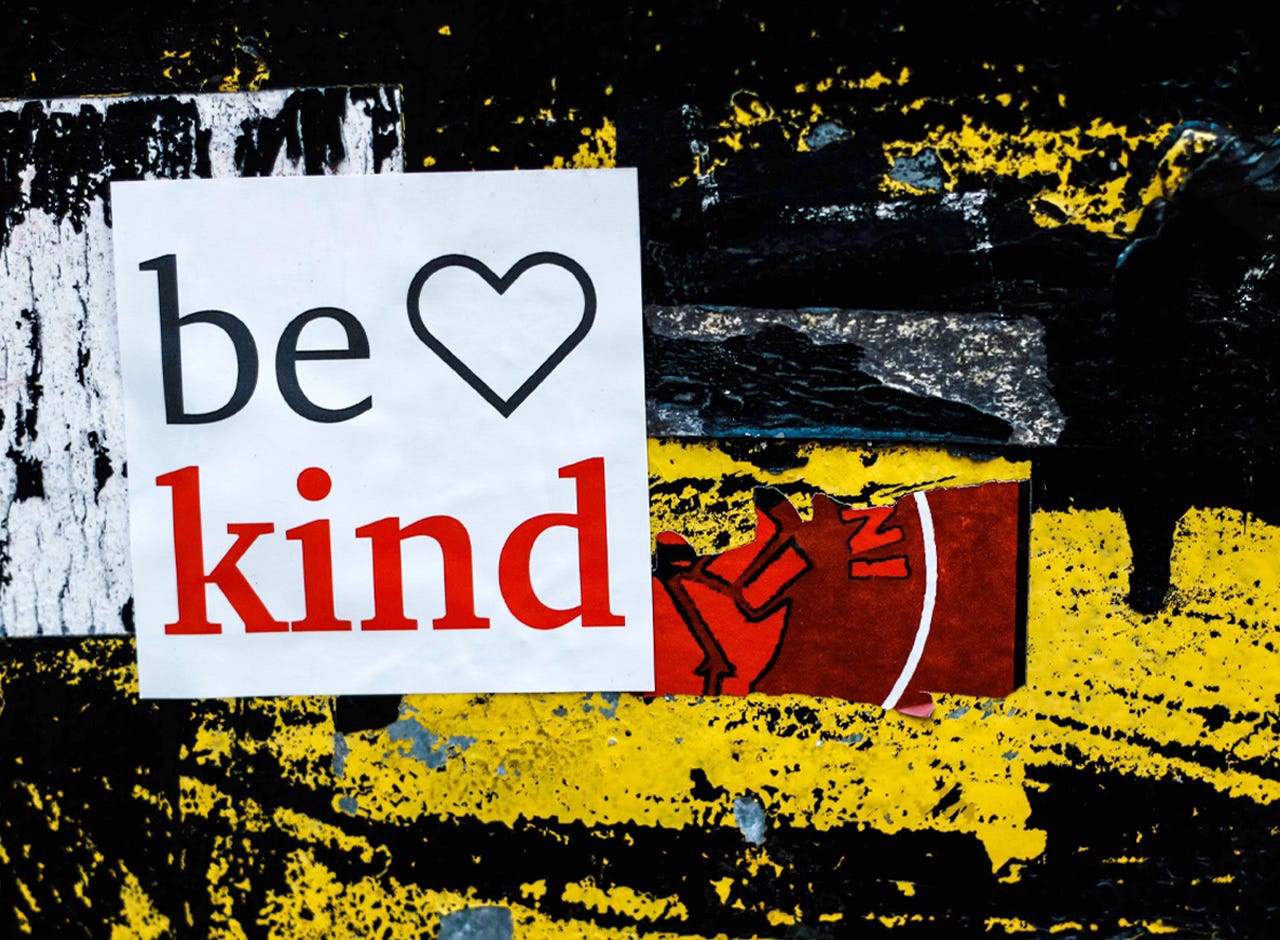
In the matter of diversity, participation is a matter of honor. “Be kind” is the associated motto, which has the philosophical caliber of a hideous vinyl wall decal, a “wall tattoo,” but has in reality become a physical branding of the self. Above all, however, it has become an imperative that suggests to the main victims of this trend, women, in a progressive way, what centuries of conditioning in family and society had instilled in them: complaisance and obedience. As is so often the case with “diverse” concerns, this formulation, which comes across as a gentle reminder, is also imbued with aggressive pathos. Being obtrusively nice in an era when social life is becoming increasingly brutalized—and when the refusal to comply with the virtue-signaling culture of “diversity” immediately results in sanctions—is equivalent to capitulating to the current conditions. It means greeting not only the grossest mistakes and transgressions, but even the most shameless misogynists, with a smile.
This is followed by another repulsive dimension of the twisting of the word “self-determination,” because the “m/f/d” [male/female/diverse] abbreviation, which appears in an increasing number of public announcements and promotions, will never bother those for whom some social interaction with gender and sexual minorities would actually be beneficial. It is directed exclusively against those who have still experienced remnants of bourgeois socialization, and they are called upon to bow to the new demands in order to institutionalize a further level of control that exposes everyone to each other. The whole diversity hype arose from the knowledge that the public social conflict zones—which, as an evening walk through any German city center and almost every use of the regional train reveals, are permanent—do not behave in opposition, but in complement, to the talk of “diversity.” It is therefore worth looking up what “self-determination” also means elsewhere, albeit still under the aegis of diversity. In the report Muslimfeindlichkeit – Eine deutsche Bilanz [Muslimophobia: A German Balance Sheet], published in 2023 by the “Independent Expert Group on Muslimophobia” and issued by the Federal Ministry of the Interior and for Homeland Affairs, the term appears as follows: “It should be noted that the general ban on the hijab restricts the right to self-determination and freedom of religion of its wearers and therefore appears disproportionate.”41
To understand what is behind the push for intrusive requests to be nice, it is again worth looking back to the 1970s. In 1975, a dozen female authors published the anthology Mädchenbuch auch für Jungen [Girls’ Book, for Boys Too], which was aimed at young female readers. It contained an article by Elfriede Jelinek entitled “A Call to Unfriendliness,” which formulated the exact opposite of the “be kind” drivel of today. The writer called on boys to protect not the “seemingly helpless” girls but rather the “strong and independent,” in order not only to appreciate their self-fulfillment but also to actively support them as “people among other people.”42 However, in sexually “diverse” times, the strong and independent girl runs the risk of being mistaken for a boy by those around her.
Thus, “self-determination” means neither autonomy and emancipation nor protection from violence, but a decree that overrides the obvious to prepare for rough times that are likely to become only more uncertain and brutal. For what is the talk of “Gayropa,” which is popular in Russia, supposed to be if not the post-Soviet counterpart to the anti-Western tirades behind crazy postulates like “homonationalism” by Jasbir Puar? The “Querfront” [“cross-front,” the Weimar-era alliance between the far right and far left—ed.], which, among others, Vanagas and Vanagas defamatorily ascribe to dissidents,43 has long been lived within their own milieu, subsidized by the state, and sold to the general public as science. The goal is well known: the West is to die, and with it the “binary gender order” that is considered its essence. The adepts of Foucault and Butler know what they are working on. What they don’t know is that they, too, will have to pay the price when their work one day is done.
Vojin Saša Vukadinović is a historian. He has, among other books, edited several anthologies on the past and present of antisemitism, racism, and migration, and has published scholarly articles on political violence, the New Social Movements of the 1970s, identity politics, and theoretical matters.
Topics: TPPI Translations • Reflections & Dialogues
Michel Foucault, The History of Sexuality, vol. 1, An Introduction, trans. Robert Hurley (New York: Pantheon Books, 1978), p. 17.
Ibid., p. 21.
Important considerations on this can be found in Magnus Klaue, Die Antiquiertheit des Sexus, vol. 1, Kindheit – Sprache – Geschlecht, 3rd ed. (Berlin: XS-Verlag, 2022), and vol. 2, Von der Stilllegung der Lust und der Verachtung des Lebendigen (Berlin: XS-Verlag, 2022).
Foucault, The History of Sexuality, p. 18.
Ibid., pp. 49, 33.
Ibid., p. 60.
Ibid., p. 49.
Ibid., p. 44.
Critical here are the essays in Bernd Ahrbeck and Marion Felder, eds., Geboren im falschen Körper: Genderdysphorie bei Kindern und Jugendlichen (Stuttgart: Kohlhammer, 2022).
Foucault, The History of Sexuality, p. 47.
Cf. Mike Laufenberg, Queere Theorien zur Einführung (Hamburg: Junius, 2022), p. 250.
Annette Vanagas and Waldemar Vanagas, Das Selbstbestimmungsgesetz: Über die Diskurse um Transgeschlechtlichkeit und Identitätspolitik (Bielefeld: transcript, 2023).
Cf. ibid.
In this case directed against Naida Pintul, cf. ibid., p. 343.
Cf. Jasbir K. Puar, Terrorist Assemblages: Homonationalism in Queer Times (Durham, NC: Duke Univ. Press, 2007). For a critical view of the term “homonationalism,” see Moritz Pitscheider, “Der Westen und das Laster: ‘Homonationalismus’ und Flucht,” in Zugzwänge: Flucht und Verlangen, ed. Vojin Saša Vukadinović (Berlin: Querverlag, 2020), pp. 163–82.
Vanagas and Vanagas, Das Selbstbestimmungsgesetz, p. 341.
Cf. ibid., p. 346.
Cf. “Messerattacke im Jahr 2020,” Welt, March 1, 2024 (“Und was ist nach Dresden passiert? Gar nichts! Weil es ja zwei Schwule waren”); “Jugendstrafe für Angreifer nach tödlicher CSD-Attacke,” Süddeutsche Zeitung, March 22, 2023.
“27-Jähriger nach Gespräch über Geschlechterdiversität zusammengeschlagen,” queer.de, March 8, 2024, https://www.queer.de/detail.php?article_id=48750.
“Hof: Fünf junge Männer bedrohen queeres Pärchen,” queer.de, February 21, 2024, https://www.queer.de/detail.php?article_id=48551.
“Homophobe Attacke in Berlin: Vier Männer verprügeln 23-Jährigen,” queer.de, February 4, 2024, https://www.queer.de/detail.php?article_id=48360.
“Männergruppe greift trans Frau mit Reizgas an,” Mannschaft, November 21, 2023, https://mannschaft.com/a/berlin-gruppe-junger-maenner-greift-trans-frau-nachts-mit-reizgas-an.
Cf. Vanagas and Vanagas, Das Selbstbestimmungsgesetz, p. 341.
Andrea Long Chu, Females (London and New York: Verso Books, 2019), p. 63.
For a discussion of the law, see German Missions in the United States, “Self-Determination,” at https://www.germany.info/us-en/service/04-FamilyMatters/self-determination/2671874#.
Cf. the lecture by Rona Duwe, “(Self-ID) für Frauen, Kinder und Mütter?,” YouTube video, July 18, 2021, as well as Jannik Jürgens’s contribution to the detrans scout Sabeth Blank, “Sie möchte doch nur sie selbst sein,” Spektrum.de, June 2, 2022, https://www.spektrum.de/news/detransition-eine-geschlechtsangleichung-bereuen/2016037.
Judith Butler, Gender Trouble: Feminism and the Subversion of Identity (New York: Routledge, 1990), p. 180.
Cf. Theodor W. Adorno, Kultur und Verwaltung, in Gesammelte Schriften, vol. 8 (Frankfurt am Main: Suhrkamp, 1972), p. 122.
Cf. “Was bedeutet das Selbstbestimmungsgesetz?,” tagesschau.de, August 23, 2023, https://www.tagesschau.de/inland/innenpolitik/selbstbestimmungsgesetz-106.html.
Cf. Sabine Menkens and Jacques Schuster, “‘Diese Menschen sind schon zu lange drangsaliert und diskriminiert worden,’” Welt, January 8, 2023, https://www.welt.de/politik/deutschland/plus243063335/Lisa-Paus-Trans-intergeschlechtliche-und-non-binaere-Menschen-beduerfen-besonderen-Schutzes.html.
Cf. Nina Monecke, “Das ist doch kein Saunaschutzgesetz!,” Zeit Online, April 28, 2023, https://www.zeit.de/gesellschaft/2023-04/selbstbestimmungsgesetz-trans-menschen-frauensauna.
Cited in Mark Nayler, “Spanish Soldiers Have Exposed the Flaw in Gender Self-ID,” Spectator, March 8, 2024, https://www.spectator.co.uk/article/spanish-soldiers-have-exposed-the-flaw-in-the-countrys-gender-self-id-law/.
Cf. the articles in Ästhetik und Kommunikation: Beiträge zur politischen Erziehung 10, no. 37 (October 1979).
Cf. Sigmund Freud, Three Essays on the Theory of Sexuality, trans. James Strachey (London: Imago Publishing, 1949).
Cf. Aaron Lahl, “Zu Antke Engels und anderen Entwürfen einer queeren Psychoanalyse,” in Irrwege: Analysen aktueller queerer Politik, ed. Till Randolf Amelung (Berlin: Querverlag, 2020), p. 108.
Julia Kristeva, Tales of Love, trans. Leon S. Roudiez (New York: Columbia Univ. Press, 1987).
Cf. Julia Kristeva, La haine et le pardon: Pouvoirs et limites de la psychanalyse III (Paris: Fayard, 2005); Kristeva, This Incredible Need to Believe, trans. Beverley Bie Brahic (New York: Columbia Univ. Press, 2009).
Kristeva, Tales of Love, p. 71.
Cf. Elisabeth Lenk, Die unbewußte Gesellschaft: Über die mimetische Grundstruktur in der Literatur und im Traum (Berlin: Matthes & Seitz, 1983), p. 77.
Cf. Vanagas and Vanagas, Das Selbstbestimmungsgesetz, p. 341.
Cf. Bundesministerium des Innern und für Heimat, ed., Muslimfeindlichkeit – Eine deutsche Bilanz (Berlin: 2023), p. 81.
Elfriede Jelinek, “Aufforderung zur Unfreundlichkeit,” in Mädchenbuch auch für Jungen, ed. Heike Doutiné et al. (Hamburg: Rowohlt, 1975), p. 13.
Vanagas and Vanagas, Das Selbstbestimmungsgesetz, p. 340.