


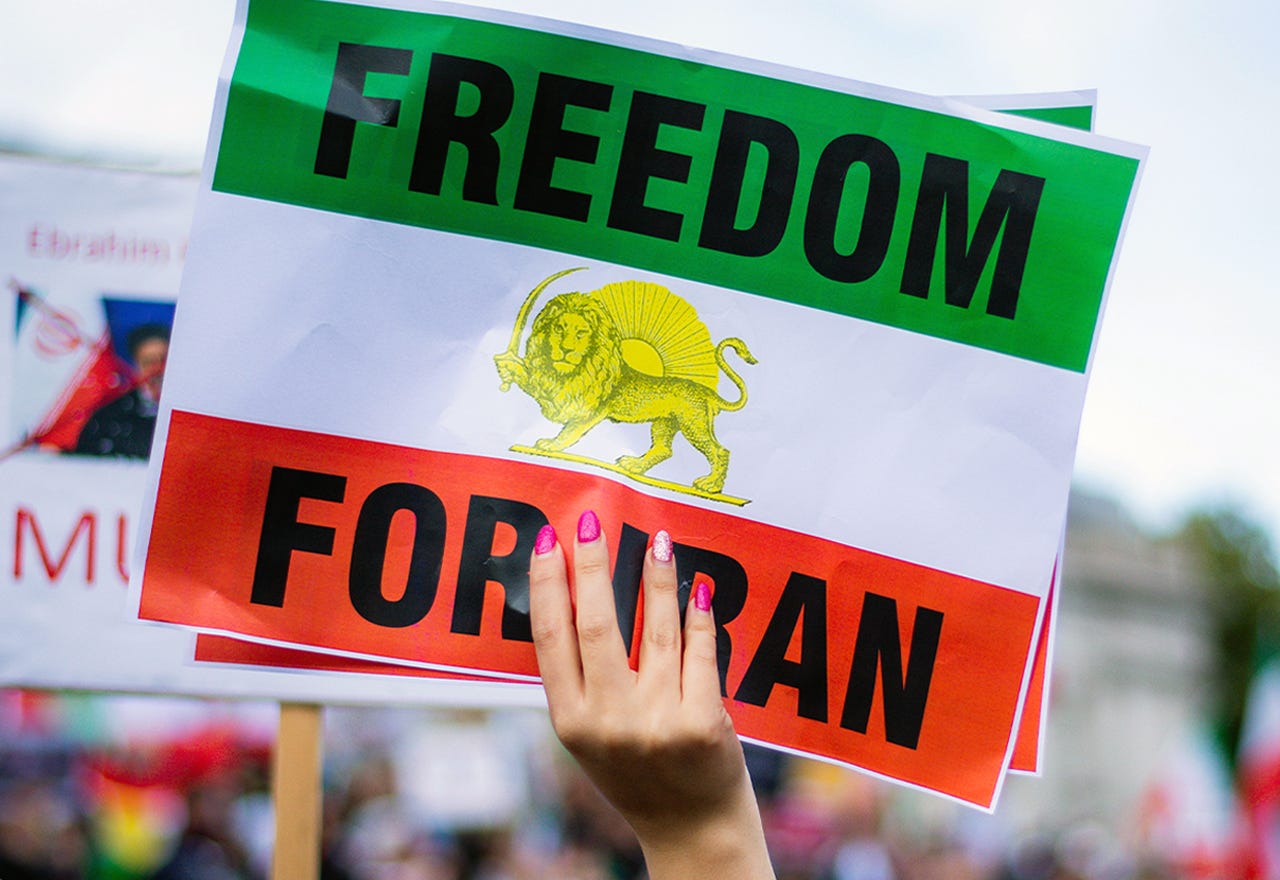
Thomas Kuhn famously argued that scientific revolutions occur when mounting anomalies create a crisis within an established paradigm, eventually producing a paradigm shift that transforms a field’s underlying worldview. Although Kuhn developed this concept to explain changes within science, the term is now often used more broadly to describe profound transformations in societies. What has unfolded in Iran in recent years marks not just another cycle of protest but a paradigm shift in the worldview of many Iranians. Some observers were stunned by the radical nature of the protests in Iran; it defied their expectations of an “Islamic country.” Inside Iran, however, this defiance did not come as a surprise. For many Iranians, the gap between public belief and the regime’s Islamic ideology has been widening for years.
The surprise among external observers reveals how persistent the assumption has been that Iran is fundamentally, or uniformly, an “Islamic” society; implicit in this assumption has been the notion that Iran’s political structure reflects a shared religious worldview with Iranian people. That assumption is increasingly untenable. The protests went beyond anger at policy or leadership. They expressed a deep rejection of Islamic ideology. Recent analyses, including research sponsored by Stanford Iranian Studies on Tehran protests from 2009 to 2023, show a clear shift in the language and demand of protests. Earlier demonstrations used reformist and religious rhetoric within the Islamic Republic’s framework. Recent protests are openly anti-clerical and secular.1 Focusing on slogans alone, however, still misses the broader transformation. Religion itself is disappearing from Iranian society.

A central feature of the twenty-first-century protests in Iran is the collapse of a historical coalition that shaped nearly every major political movement of the twentieth century: the moral and organizational authority of the clergy, the bazaar, intellectuals, and dissatisfied members of the public. For over a century, from the Constitutional Revolution to the 1979 revolution, clerical figures were often its legitimizing force. Large segments of the population followed them, mobilized under their guidance, and in many cases were willing to die for causes framed in religious terms. In the two decades before the 1979 revolution, even many radical communists in Iran, such as Khosrow Golsorkhi, articulated their struggle by using Islamic symbolism, invoking Imam Hussein as a model or pioneer of radical socialism. That pattern has now been broken.
In twentieth-century Iran, protesters rarely targeted Islam or the clergy. Reformist and nationalist intellectuals worked within a religious framework and largely avoided direct criticism of religion. They could challenge political authority, but openly confronting Islam carried severe social and personal risks. Criticizing Islam was even declared to be an illegal act. Those who crossed that line paid heavily. Some, like Fathali Akhundzade, articulated radical secular critiques but did so from outside Iran. The limits of secular critique persisted even under Reza Shah, whose rule the Islamic Republic now portrays as aggressively anti-clerical. Efforts to limit clerical power never eliminated religious institutions. Figures like Mohammad Ali Foroughi, the prime minister, and Ali Asghar Hekmat, the minister of education, cultivated pragmatic ties with religious authorities. Ahmad Kasravi’s fierce denunciations of clerical power and Islam led to his assassination by religious militants in 1946. Even intellectuals who disagreed with clerical dominance frequently regarded figures like Kasravi as too radical and destabilizing. The response from intellectuals to his killing was almost nonexistent. Virtually all stories, plays, and poems of Sadegh Hedayat, a modern Iranian writer and fierce critic of Islam, were banned during his life. He died by suicide in 1951 after the assassination of his brother-in-law, Prime Minister Ali Razmara. Razmara was killed by members of Navab Safavi’s Fada’iyan-e Islam, the group that had also assassinated Ahmad Kasravi.
All of that has changed today. Not only secularization but a radical criticism of Shi’ism has spread beyond small intellectual circles into broader society. This shift is visible in everyday life. Ideas once considered extreme now serve as a starting point. For centuries, the clerical establishment claimed authority over life’s most intimate moments—language, birth, naming, marriage, and death. Religious approval was required for legal and social legitimacy. Everyday choices were subject to clerical control or influence. The message was clear: the religious system would authorize the life cycle, and without that authorization, people faced exclusion and pressure. Naming practices provide a revealing indicator of this transformation. In early twentieth-century Iran, choosing nonreligious or explicitly pre-Islamic Iranian names carried negative social consequences. Families often felt pressure to select names aligned with Islamic tradition, not only out of belief but out of caution. People with nonconforming names sometimes drew suspicion or were linked to persecuted religious minorities, such as the Baháʼís. Now civil registry data from the past three decades shows a steady shift away from religious names toward historically Iranian and more secular ones.2
This shift also appears in life-cycle rituals, especially marriages and funerals, where clerical authority once seemed absolute. Over the past decades, a parallel culture has developed in which people comply with the state’s religious requirements only to the extent necessary for legal survival while creating alternative ceremonies that reflect historical Iranian values and identities. Marriage shows the shift clearly. Iran has no civil marriage, so couples still complete the Islamic contract for legal recognition. Yet many couples now hold separate ceremonies rooted in Iran’s history, literature, and secular culture. They treat the religious contract as paperwork and seek meaning in alternative celebrations. These include mixed-gender gatherings and dancing, both of which are banned by religious authorities in Iran. In these counter-religious celebrations, couples recite Persian poetry instead of the Arabic aqd ceremony and serve wine despite its prohibition and prosecution under the Islamic Republic.
Funerals show an even sharper change. In Islam, proper burial and the recitation of prayers for the dead, including the talqin—reciting Quranic verses in the ear of the dead—are considered essential. Today many families in Iran choose otherwise. Instead of inviting a mullah to recite prayers, rowzeh, and the Qur’an, they hold memorials in secular spaces. These gatherings often include classical Iranian music and poetry readings, which is notable given the long-standing restrictions on music and musical instruments in Islamic law. During recent protests, people buried victims without Islamic rituals. They gathered around music, poetry, mourning dance, and symbolic acts like cutting hair and invoking the Shahnameh and Iran’s historical flags. Life-cycle rituals once anchored religious authority, and mosque-centered rites once dominated. Even state media now acknowledge declining religious participation and empty mosques. The state still enforces religious law, but many people redefine these rituals themselves, and Islam has lost much of its influence over birth, marriage, and death. Authority is shifting.
This shift is cultural and psychological as well as political. Language is often an accurate registry for such changes. Iranians are making this shift visible in everyday speech. Many now replace Islamic expressions such as salaam, inshallah (allah willing), and mashallah (allah be praised) with Persian, nonreligious alternatives like doroud (hello), omidvaram (I hope so), and afarin (best wishes), emphasizing human agency over divine will. People are building identities and practices outside a religious framework. Public festivals show the same pattern. After 1979, the state tried to center religious holidays and sideline Iranian celebrations. Nowruz, the first day of spring, and Shab-e Chelleh, the winter solstice, survived mostly in private. Festivals like Sadeh and Mehregan lingered on the margins, but in recent years they have returned to public space. Nowruz has become a powerful marker of national identity, and other festivals are increasingly visible in cities. The state promotes Muharram and Safar as months of mourning, yet many now use this period for travel rather than religious rituals or pilgrimages. The tension between Iranian cultural traditions and Islam has deep roots. Influential medieval religious authorities such as al-Ghazali long condemned pre-Islamic festivals, yet these traditions endured, and many have been revived as forms of cultural resistance.
Survey data from independent research groups outside state control points to a sharp decline of Islamic belief and identity in Iran. Even among those who still describe themselves as religious, many draw a firm line between private belief and any support for an Islamic political order. The GAMAAN survey on religion in Iran in 2020 reported that only about 32 percent of respondents identified as Shi‘i Muslim, roughly 5 percent as Sunni Muslim, and around 72 percent opposed the compulsory hijab.3 These figures were recorded before the “Woman, Life, Freedom” uprising, which exposed an even deeper rejection of Islamic rule and identity. Large segments of the population now reject religious identification altogether.
This is why the current protest movement cannot be understood solely as a political uprising against a specific regime. It reflects a paradigm shift. Today, many protesters in Iran openly question Islam itself, at times through acts such as burning hijabs and rejecting symbols associated with Islam.4 The Islamic Republic appears aware of the shift. Clerics now justify the hijab by invoking Persepolis reliefs (the capital of the Achaemenid Empire in ancient Iran) and female figures from the Shahnameh (the Book of Kings is Iran’s epic mytho-historical work) rather than Fatemeh, the daughter of Muhammad. If in 1979 the most conjured symbols were Imam Hossein and Ashura, today figures like Kaveh the Blacksmith have taken their place, with protesters invoking the Shahnameh’s story of resistance against Zahhak, the mythical figure of Arab origin who ruled Iran for a thousand year and brutalized its youth. The revival of Iranian historical festivals and figures, the diversification of private belief, the emergence of parallel life-cycle rituals, and the language people use all point in the same direction: a society becoming more secular. A political transformation may or may not come quickly. A cultural and social transformation, however, has already occurred.
Topics: Reflections & Dialogues
Mohadeseh Salari Sardari grew up in Bandar Abbas in southern Iran and studied architecture there before pursuing her PhD in the United States. She is currently completing her PhD dissertation, Literary Selves and Architectural Space, at Brown University, which examines modern architectural history in Iran and the role of women in shaping Iran’s local modernity. She is currently a lecturer in Stanford University’s Department of Comparative Literature and has worked with museum collections and exhibitions at institutions including the Museum of Fine Arts, Boston, and the RISD Museum. Her work on Iranian literature, art, and culture has been published in both Persian and English.
Stanford Hamid and Christina Moghadam Program in Iranian Studies, “City of Unrest: A Geolocated Archive of Protests in Tehran (2009-2023),” event listing, February 2, 2026, https://iranian-studies.stanford.edu/events/city-unrest-geolocated-archive-protests-tehran-2009-2023.
Abbas Abdi, “Propagation of Religion Before and After the Revolution” [in Persian], Etemad, https://www.etemadnewspaper.ir/fa/main/detail/242322/.
GAMAAN, “Iranians’ Attitudes Toward Religion: A 2020 Survey Report,” August 25, 2020, https://gamaan.org/2020/08/25/iranians-attitudes-toward-religion-a-2020-survey-report/.
“Images: Burning of the Mosalla Mosque and Qur’an Books in Rasht,” Gilanestan, January 11, 2026; “Images of the Burning of a Mosque,” Tabnak, January 14, 2026; “Report on Burned Mosques,” Hamshahri, January 10, 2026.