


Money is essentially the property of the community, not of the prince.
—Nicole Oresme, De Moneta, c. 1360
In a single hour on the last Monday of June, the Supreme Court buried and half-resurrected nearly a century of bad New Deal–era precedent. In Trump v. Slaughter, the chief justice interred Humphrey’s Executor, restoring the constitutional rule that officers who wield the executive power answer to the president, who answers to the people. Minutes later, in Trump v. Cook, the same chief justice exempted a single institution from the rule he had just restored. The Federal Reserve, five justices held, stands apart. Its governors may not be removed except for a “cause” that courts will scrutinize. Justices Thomas, Alito, Gorsuch, and Barrett dissented in various registers. The lineup alone should give pause; the reasoning gives more.
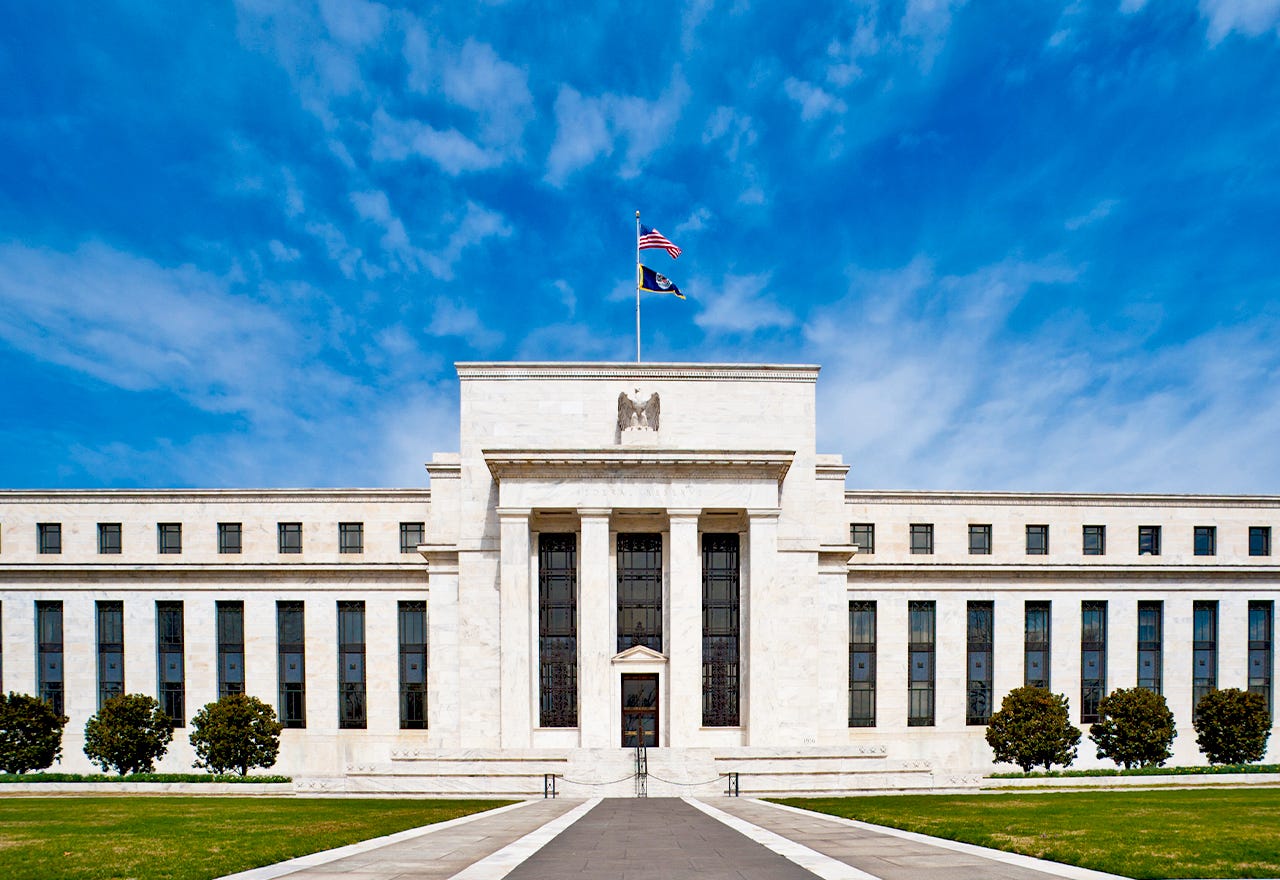
What is remarkable about Cook is not its bottom line, which resolved only an application for a stay and left the merits for another day, but the material out of which the exemption was built. The Court did not rest on constitutional text; there is none. It did not rest on structure; the structural argument had just prevailed, in the other case, for the other side. It rested on a genealogy. The United States, the Court declared, has a “long tradition of independent central banking,” descending from the Bank of North America, which “predates even our Constitution,” through the First and Second Banks of the United States, to the Eccles Building. The Fed, we are assured, “maintains the balance struck by the founding generation under modern circumstances”; the Court would not unsettle what it called, borrowing Justice Alito’s phrase, a “special arrangement sanctioned by history.”

When a court can no longer justify an institution’s insulation by argument, it reaches for pedigree. And pedigree, as any student of religion knows, is the signature of sacral rather than constitutional authority. Churches legitimate themselves by apostolic succession; constitutional institutions are supposed to legitimate themselves by conferred and accountable power. The question Cook raises, and the question this essay pursues, is what it means that the American republic now secures its most powerful domestic institution by the first method rather than the second.
Begin with the tradition itself, because it will not bear the weight. The First Bank was chartered in 1791 over the constitutional objections of Madison and Jefferson, who argued that Congress possessed no enumerated power to charter a corporation and that “necessary and proper” meant necessary, not merely convenient; the objections were serious enough that Washington solicited formal opinions before signing. The Bank’s recharter died in 1811, substantially on constitutional grounds. Madison acquiesced in the Second Bank in 1816 only through his doctrine that repeated practice had “liquidated” the constitutional question, a theory of settlement by exhaustion. McCulloch blessed the Bank in 1819, and Andrew Jackson refused the blessing. His 1832 veto message denied that the Court’s precedent could bind the political branches, and the people ratified the refusal by reelecting him overwhelmingly. The Bank died in 1836. There followed seventy-seven years, more than a third of the republic’s existence, in which the United States deliberately had no central bank at all. This, then, is the “long tradition,” an institution contested for every year of its life, killed twice, and then renounced for two generations. Examined honestly, the majority’s own history of the Banks testifies for the dissent.
The deeper problem is that even a friendlier reading of the Banks proves the wrong proposition. The First and Second Banks were majority privately owned, profit-seeking commercial corporations in which the government held a minority stake; Hamilton defended the First Bank precisely on the ground that its powers resembled those of a private mercantile partnership. They set no policy rates, conducted no open market operations, pursued no employment mandate, and were disciplined externally by specie convertibility. Their independence was the independence of private property from the state. The Federal Reserve’s independence is the inverse, sovereign public power insulated from the elected executive, whose appointment authority operates on a fourteen-year lag, insulation by calendar where the law would not suffice. Justice Thomas’s dissent presses this point, and presses one more that the majority leaves discreetly unexamined. The Fed’s actual intellectual ancestry runs not to Philadelphia in 1791 but to Berlin. Paul Warburg, the architect of the Federal Reserve Act, campaigned openly to transplant the model of the German Reichsbank, and Woodrow Wilson, who insisted on a governing board of experts, had spent a career admiring Prussian administration and doubting the competence of democratic publics. The First Bank is the Fed’s icon, not its parent. Its parent is the European administrative state.
Which is why Europe is not a digression here but the experiment’s completion. If one wants to know where the Cook premises lead, one looks where they have been carried to their logical end. The euro liquidated national currencies that were condensed national narratives—the Deutsche Mark above all, that strange vessel into which postwar Germany, remembering the wheelbarrows of Weimar, poured the pride it was forbidden to invest elsewhere—and replaced them with money belonging to no people, issued by an institution answerable to none. Or answerable, as the Greeks would learn, to one nation in particular. The euro did not so much create money belonging to no one as universalize German money without German accountability, ordoliberal discipline exported without representation. The European Central Bank is the purest independence design ever attempted. Its mandate and insulation are entrenched at treaty level, revisable only by the unanimous consent of every member state, which is to say never. The Federal Reserve’s independence is a statute Congress could amend on any Tuesday. Britain is more candid still. The Bank of England’s independence is a statutory grant of 1997, and the Treasury retains the power to direct the Bank in extremis, delegation with the string left visible. The ECB’s independence is placed beyond politics by construction. It is Cook’s footnote grown into a constitution.
And the record of that perfected independence is a record of coercion. In 2011, the ECB’s president sent confidential letters to the elected governments of Italy and Spain dictating labor market and fiscal reforms as the tacit price of bond purchases. Ireland was informed that emergency liquidity would end unless it accepted a program and made bank creditors whole. Cyprus was given days to accept EU and IMF reforms before its economy would be shuttered. And in the summer of 2015, the ECB capped emergency assistance to Greek banks in the middle of a standoff with a newly elected government, closing the country’s banking system less than a fortnight after a referendum in which the voters had rejected the creditors’ terms; the government capitulated inside a month. Whatever one thinks of that government’s economics, the mechanism deserves a name: an unelected monetary authority used control of the payment system to break an elected ministry. Berlusconi’s replacement by a technocratic cabinet under bond market pressure in 2011 belongs to the same file. Independence from voters revealed itself, under stress, as discipline administered to voters. The institution was never neutral between Greek citizens and Greek creditors; it simply had a constituency other than the demos.
The German Federal Constitutional Court has spent three decades naming this drift in juridical language. From its Maastricht judgment of 1993, warning that the Union must never seize Kompetenz-Kompetenz, the power to define its own powers, through Gauweiler, to the Weiss judgment of 2020, in which the court at Karlsruhe, a hundred miles and a full theory of legitimacy from the ECB’s towers in Frankfurt, for the first time declared an act of a European institution ultra vires in open defiance of the European Court of Justice, the anxiety has been constant. Monetary policy, once insulated and self-interpreting, silently annexes fiscal and economic competence, and no one can call it home because it answers to no one. Jackson’s veto message and the Weiss judgment are the same protest separated by two centuries: the political sovereign refusing to concede that a monetary institution’s self-description settles the constitutional question.
There remains the case that unmasks the whole arrangement. The Bank of Russia is, on paper, an independent central bank, and by common consent a superbly run one. Its governor, Elvira Nabiullina, was named central bank governor of the year by Euromoney in 2015 and by The Banker in 2017, celebrated by the very Western institutions her craft would later frustrate. She even perfected the sacral communication style of the guild. For years, markets parsed the brooches she wore to press conferences as oracular guidance, a hawk when rates rose, a dove when they fell, a language she eventually acknowledged as her own. Then came February 2022. With half the reserves frozen, she executed the textbook without flaw, the policy rate to twenty percent, capital controls, the exchange closed, the pre-built payment infrastructure switched on. The war economy quickly returned to vigor. Bloomberg reported, citing people familiar with the discussions, that she sought to resign in the invasion’s first weeks and was told by Putin to stay. At her emergency address she wore black, and no brooch at all.
The lesson is not that Russia has a good central banker, though it does, and her excellence is precisely what makes the case damning. The lesson is that in the hour of the exception, independence evaporated, as it always does, because when sovereignty is genuinely at stake every central bank aligns with the state that houses it. Carl Schmitt compressed the point into a sentence long ago: “Sovereign is he who decides on the exception.” The corollary from Moscow is that the priesthood serves whoever commands the temple. Nor did the West behave differently in kind. By freezing another central bank’s reserves, it proved a plain proposition. Money held inside another sovereign’s system is held at that sovereign’s pleasure, and reserves are not property but permission. It also wielded the ultimate sanction of any communion, excommunication, at civilizational scale, and the response has been schism, parallel payment rails, bilateral settlement, a counter-communion under construction. Excommunication disciplines only those who cannot found a rival church.
In Frankfurt, insulation from voters became coercion of voters; in Moscow, statutory independence dissolved on contact with the sovereign decision. What, then, does independence produce in Washington? Not neutrality; there is no such thing. Insulation never removes an institution from politics; it only selects its master. Cut off from the constitutional chain that runs from officer to president to electorate, the institution answers instead to whatever constituency can still discipline it, which in Washington means the bond market, the banks it regulates and rescues, the profession that credentials its staff, the peer consensus of Basel and Jackson Hole. What the American vernacular has come to call the deep state is, in the monetary context, exactly this and nothing more occult, not a cabal but a class, a permanent estate to which accountability silently migrates when the removal chain is severed, its governance laundered as expertise. Autocracy assigns money to the prince. Technocracy assigns it to the priesthood. The constitutional wager, the American wager, was that whoever holds it must give account.
The pragmatist will answer that the Fed, whatever its pedigree, works. The nineteenth century was one panic after another, they will say, and no sane nation would hand the money supply to a new institution in a deranged age. The ledger is more mixed than the memory, including as it does the Depression the Fed deepened, the great inflation it accommodated, and the recent one it pronounced transitory; “it works” is the epitaph of every establishment, composed a year too early. But grant the premise whole. Prudence is an argument addressed to the wrong branch. If insulation is wise, Congress may enact it with open eyes, as Parliament did in 1997. Wisdom is a case for legislation, not a license for a Court to find immunity in a pedigree.
This is why the theological vocabulary is not ornament but diagnosis. Central bank independence is secularized libertas ecclesiae, the medieval freedom of the church from lay investiture reborn as the freedom of the monetary magisterium from presidential removal, and the Cook opinion reads like nothing so much as a concordat, the temporal power conceding the temple’s immunity in exchange for peace.
And the sacred, once transferred, can be turned against its former custodian. In January 2013 the Bank of Italy, citing the Holy See’s failures against money laundering, forbade Deutsche Bank’s Italian unit from processing electronic payments inside Vatican City. For six weeks the original sacral institution of the West could not accept a card or dispense cash from a machine; the Vatican Museums, five million visitors a year, went cash-only amid the Vatileaks winter and the scandals then engulfing the Institute for the Works of Religion, the Holy See’s own bank, whose accounts had drawn money-laundering scrutiny for decades. On February 11, Benedict XVI announced the first papal abdication in six centuries. The next day, the terminals came back on, switched to a Swiss processor conveniently beyond the reach of European banking law; Rome escaped the interdict the way the excommunicated always have, by finding a communion outside the writ of the new church. Benedict spoke only of his failing strength, and nothing requires disbelieving him. But no medieval chronicler would have missed the shape of the story: an interdict laid upon Rome and lifted the day after the pontiff announced his departure. For a thousand years the Church suspended sacraments to discipline princes. In 2013 a central bank suspended payments to discipline the Church, and the discipline held until the throne was vacated. Libertas ecclesiae now runs at the pleasure of the bank. Whatever can excommunicate the Vatican has become the thing the Vatican used to be.
René Girard taught that founding myths exist to conceal founding conflict, and the Court’s serene procession from 1781 to 2026 is such a myth, now canonized. Even the concurrence confesses the sacral reflex. Justice Kavanaugh would not risk the upheaval of leaving the Fed’s status uncertain, some settled questions being too dangerous to reopen. Treating a constitutional question as unthinkable is precisely how one recognizes that an institution has left the constitutional order for the sacred one. In the most iconoclastic era in American memory, the one icon the Court chose to preserve was the temple of money.
The objection will come that America is thin soil for the sacred, that a nation of Congregationalists who take communion with Wonder Bread and tap water never truly sacralized anything. It sacralized one thing: the Book, as text and as object, read by every plowboy and sworn upon in every courtroom. American sacrality is textual, and so is American constitutionalism. Sanford Levinson long ago distinguished what he called “protestant” constitutional interpretation, which locates authority in the text alone, open to every citizen, from “catholic” interpretation, which supplements text with unwritten tradition mediated by an authoritative magisterium. Originalism is not one method among many; it is the hermeneutic of a sola scriptura republic, whose founding document lies in a marble shrine under honor guard. Measured against the nation’s own civil religion, Cook is a category error, a catholic ruling delivered in a protestant church, apostolic succession through the Bank of North America offered to a people that swears on the text. Jackson understood this in his bones. His veto message, with its warning that mere precedent is a dangerous source of authority, is the protestant hermeneutic in action, the layman reading the text against the magisterium.
Luther, who watched a temporal power drape itself in spiritual immunity, supplies the closing word, along with the bishop of Lisieux. Money is a creature, Luther insisted, and the most seductive idol on earth; whatever we are told must never be questioned has become a god, and the Large Catechism warns where hearts that cling to it end. Money belongs to the temporal kingdom, where everything gives account. And Oresme, writing while princes debased coin, located the ownership of money neither in the prince nor in any guild of experts but in the community itself. The American founders carried Oresme’s point one step further. In a republic, even the prince gives account. That is the principle Slaughter honored on the same June morning that Cook abandoned. And the problem with Cook is not that the Federal Reserve won. There are serious constitutional arguments for an insulated central bank, and Congress is free to write them into law. The problem is how the Fed won. The Court did not point to any power the Constitution confers. It pointed to a pedigree, and it warned that the question was too dangerous to reopen. That is how a priesthood defends itself, not how a court reasons. Whether the Federal Reserve deserves its independence is a question the American people, through the leaders they elect, may still answer. What they should not accept is a Court that placed the question beyond asking. Nothing in this republic is sacred in that sense. Whatever governs must answer.
Tim Rosenberger is a pastor and attorney and cofounder of Excelsior Action.