


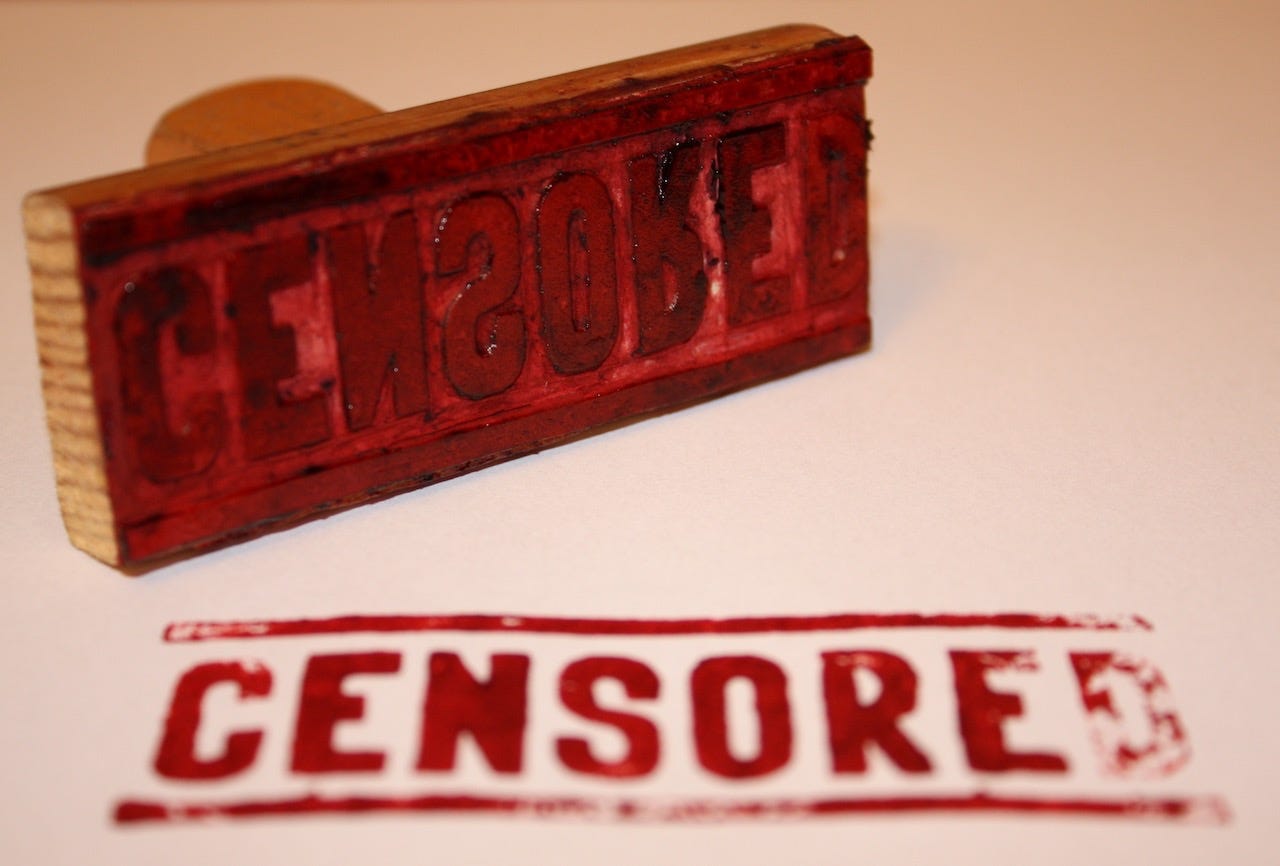
A distinctive feature of the recently released 2025 National Security Strategy is its recognition of culture as a key dimension of national interest. Of course, it does not neglect the standard security topics—alliances, foreign policy, and defense capacity—but it also pays significant attention to questions of culture and national self-understanding. What that means in detail for the United States is a topic for a separate treatment; here however it is worth noting how the evaluation of security in Europe—and the reaffirmed American interest in European security—involves worrisome cultural developments on the old continent. To be sure, in the background, the traditional American insistence that our European allies invest more in their militaries continues, since their defense is not only about culture. But culture matters; civilizational erosion in Europe and the undermining of shared values in the Atlantic Alliance are threatening the security agenda that more tanks and missiles may not be able to fix.
Precisely because the document reaffirms American interest in Europe’s thriving, it also calls out—harshly—deleterious cultural developments. If Europe is voluntarily giving up on freedom and instead pursuing policies of repression, the credibility of the alliance necessarily declines. Policies hostile to core rights in Europe will undermine the American public’s attachment to the historical connection. “In particular, the rights of free speech, freedom of religion and of conscience, and the right to choose and steer our common government are core rights that must never be infringed. Regarding countries that share, or say they share, these principles, the United States will advocate strongly that they be upheld in letter and spirit. We will oppose elite-driven, anti-democratic restrictions on core liberties in Europe, the Anglosphere, and the rest of the democratic world, especially among our allies” (NSS, p. 12).

Washington’s criticism toward Europe could hardly be clearer: countries that share—or perhaps only say they share—these values are not succeeding as custodians of the values. In our contemporary public sphere—in the press and in university discussions—the anxiety about threats to democracy or the perception of a “democratic backsliding” is typically directed by the left against the right and by Europeans against the United States. The new National Security Strategy document turns that around and, affirming that there is a threat to democracy, locates it in the managerial practices of Europe and England. That erosion of liberty, the systemic suppression of heterodox opinion, is itself a threat to security.
Part of this grim diagnosis of the European values decadence is a reprise of Vice President Vance’s tough love comments from the Munich Security Conference. Conventionally the Atlantic Alliance has been understood as a community of values, the familiar collection of rights that have come to define Western societies since the era of the Enlightenment and the American and French Revolutions—foremost among them freedom of speech and freedom of opinion. Without free speech, the public sphere cannot act as a brake on government power. Yet for observers of the European scene, precisely the power of those freedoms appears to be under assault. Those rights, dating from 1776 or 1789, were in fact disseminated across society only slowly and inconsistently; but is liberty today suddenly subject to an abrupt constriction in the shadow of cancel culture and the pandemic orders?
One large version of this repression involves the Digital Services Act, which ultimately is an attack on large U.S. technology companies when they refrain from carrying out a mandated policing of free expression. If social media platforms allow too much speech, they face indictments and fines from the European Union. Meanwhile, however, there are micro versions of the same efforts to surveil and to control. There was, for instance, the sorry case of the unlucky German retiree who tweeted about the former Minister of the Economy, calling him stupid—ein Schwachkopf—which was enough for the police to show up at his door and confiscate his electronic equipment. Or the case of media critic Norbert Bolz, whose satirical improvisation of an erstwhile Nazi phrase led to a police visit. Sarcasm is not an excuse. The state has no tolerance for irony, except its own when it is unintended.
And, believe it or not, we now face an organized assault on a library—an unlikely threat to the democratic order—because it houses a collection of books about conservatism (reportedly conservatism in the United States and Russia are key topical areas). This Library of Conservatism in Berlin is scheduled to be expelled from a library association and thereby excluded from a vital cataloging network—perhaps not the stuff of violent drama but nonetheless a not-so-subtle form of censorship: the books will not be burned, but researchers will have a very hard time finding them. The biographer of Adorno, Lorenz Jäger, discusses the matter here. Note: there has been no finding by governmental authorities of illegal extremism, no indictment by a district attorney, nor any opportunity for due process in a court of law. The only problem is the character of the book collection.
From a U.S. perspective, three aspects of the effort to ostracize the library are noteworthy.
First: This is an obvious example of the cancel culture movement, which evidently continues in Germany even if it is being rolled back in the United States (or so we hope). The German left habitually quotes the martyred Communist Rosa Luxemburg, famous for her statement—in the context of her attack on Lenin and the Bolsheviks, by the way—that freedom always means the freedom of the others. Apparently that does not hold if the others are conservatives whose freedom may be curtailed.
Second: The library affair is one piece of the Kampf gegen Rechts, the campaign against the right, that has dominated the German political discourse for a number of years. If the old West Germany defined itself in terms of an anti-totalitarian consensus—symmetrical opposition to Nazis and to Communists—the new German culture sees no problem on the left, no matter how violent left protestors may become. Instead, it directs all its moralizing wrath against the right, even the moderate right. The scope of “the right” that is subject to vilification grows ever larger. In place of an unquestionably appropriate rejection of violent neo-Nazis, we witness a political culture in which all positions, even those slightly right of center, face suspicion and denunciation. The net effect of this redrawing of the political map has been to curtail significantly the latitude of the notionally conservative Chancellor Merz—and that is probably the political point, rendering the conservative parties dependent on the left.
Third: The attack on the Library of Conservatism is indicative of a particularly insidious technology of repression, perfected during the cancel culture years. There is, so far at least, no direct demand to close the library. However, it will be cut off from a communication and catalogue network and therefore rendered effectively inaccessible. This is so-called deplatforming based on denunciation and surveillance, with no possibility of appeal, except by going to court. As local as this story about a single book collection in Berlin may seem and no matter how bizarre it may sound, it encapsulates the unfolding program for repression and censorship that remains at the core of contemporary progressive culture policy: disapproved speech is defined, one way or another, as hate speech and—such is the intent—either directly criminalized or indirectly silenced.
Russell A. Berman is the Walter A. Haas Professor in the Humanities at Stanford and Senior Fellow at the Hoover Institution, where he directs the Working Group on the Middle East and the Islamic World. He previously served as Senior Advisor on the Policy Planning Staff of the United States Department of State and as a Commissioner on the Commission on Unalienable Rights. He is currently a member of the National Humanities Council. He is the Editor Emeritus of Telos and President of the Telos-Paul Piccone Institute.