

Schlemiels vs. Muscle Jews: From Max Nordau to Joshua Cohen’s “The Netanyahus”
by Artur Abramovych

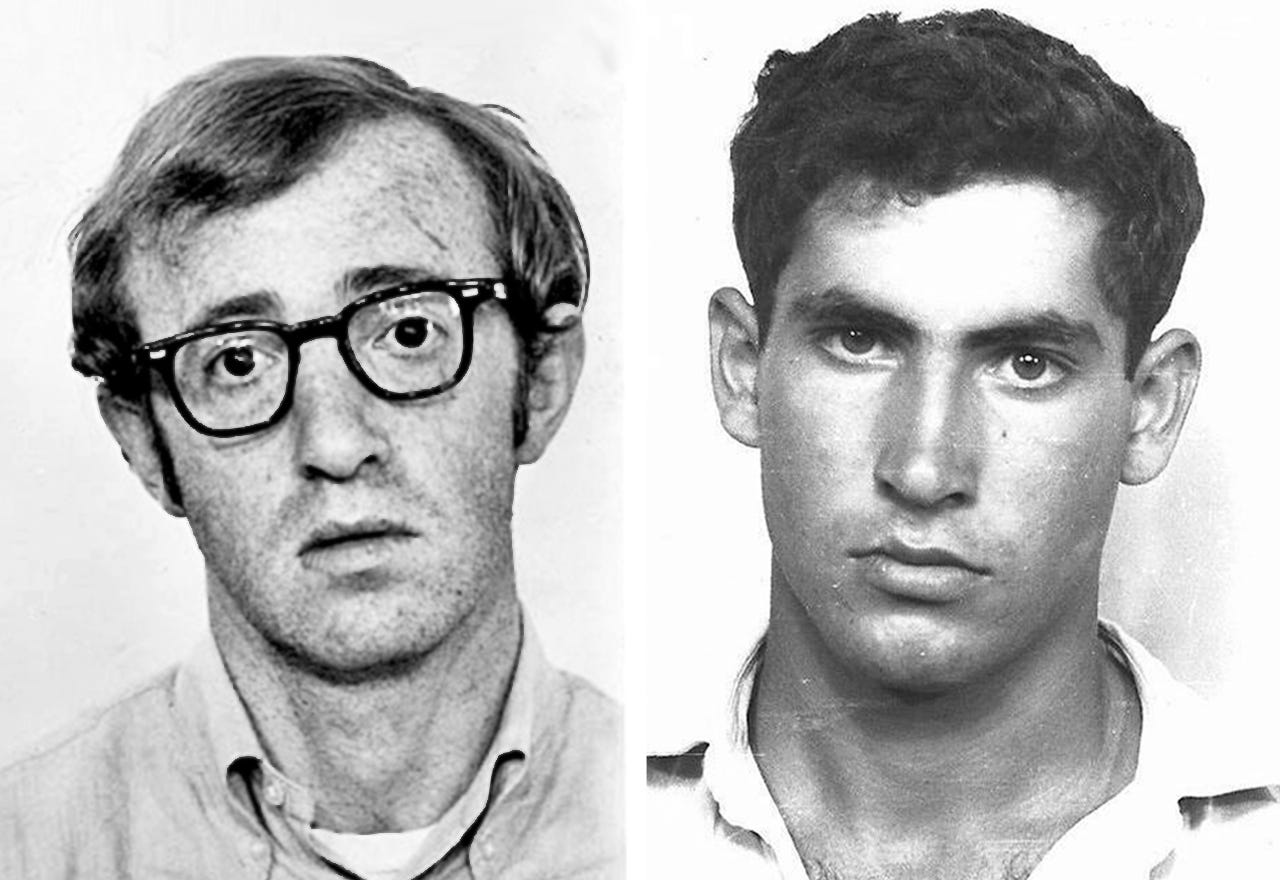


The resolute Israeli preemptive strike against the nuclear program of the Islamic Republic of Iran, symbolically named “Rising Lion” (Hebrew: Am keLavi: “A nation like a lion”), has shown to the world that the Jews are not to be trifled with and that they will take their own defense into their own hands, if necessary, even when facing enormous resistance. The “Muscle Jew” conjured up by the Zionist Max Nordau, a close advisor to Theodor Herzl, and now incarnated by the right-wing conservative Benjamin Netanyahu, seems to have completely displaced, or at least banished to the margins of insignificance, that old type of Jew so ardently yearned for by left-wingers: the spiritualized and multilingual, yet defenseless and cowering, ghetto Jew with his notorious klezmer music and his lovable neuroses, the so-called schlemiel.
This schlemiel is one of the archetypes of Eastern Jewish literature. He is the clumsy, unlucky fellow who gets into one mess after another, yet cuts an extremely comic figure in the process. Even the best scholars have failed to answer the question of the etymological origin of the name. In his late poem Jehuda ben Halevi, Heine lamented that “it has remained unknown, / Like the holy Nile’s springs, / where its origin is,” and then tells his own version: A certain Schlemiel was the one who, during the Exodus from Egypt, was mistakenly slain by an enraged bigot because he had been mistaken for an immoral fellow. Another, far more plausible etymological explanation is that in the rabbinic exegetical text Bereshit Raba, the tribe of Simon is portrayed as particularly poor, and the name of their tribal chieftain, Schlemiel, thus developed into a synonym for the poor wretch and unlucky person par excellence. In any case, the schlemiel curiously first found his way into German literature (in Adelbert von Chamisso’s Peter Schlemihl (1813), who sells his shadow to the devil), while in the Eastern Jewish sphere he was initially transmitted orally. The arguably most famous, though not the most prototypical, literary expression of this type appeared much later, in the main character of Sholem Aleichem’s Tevye the Milkman (1895–1916), the desperately poor Job from the Russian Empire, punished by life with seven daughters, but also a clever bungler who never loses his sense of humor even in the face of financial hardship and persecution (or at times, persecution mania). This schlemiel became world famous via Broadway through the musical adaptation Fiddler on the Roof (1964).

American Jewish literature would later follow in the footsteps of Yiddish literature. But completely unnoticed by researchers—with the exception of American-Jewish philologist Menachem Feuer of the University of Waterloo (Canada)—the Eastern Jewish type of schlemiel from the Tsarist Empire was by no means directly transported to the Western Hemisphere, but rather first to Central Europe, and as early as 1900: Aron Ettore Schmitz, better known by his pseudonym Italo Svevo (1861–1928), was a fully assimilated Trieste Jew who even converted to Catholicism and whose works do not explicitly feature Jewishness. Svevo researchers concluded several decades ago that the first pseudonym he used, Ettore Samigli, represents an Italianized form of schlemiel. What they missed, however, was that it was Svevo who, especially with his last novel, La coscienza di Zeno (1923), translated this Eastern Jewish type into the Western context. His narrator, the amiably awkward Zeno, from the multiethnic trading city that was still part of the Habsburg monarchy, no longer has financial difficulties; on the contrary, he is a rich stockbroker, bored by life and bourgeois conventions; sexual frustration replaces financial worries here. Incredibly funny stories happen to him, too, which he, an incorrigible neurotic, tells his psychoanalyst; the novel consists of these reports to the doctor for the insane.
American Jewish literature, with Nobel Prize winner Saul Bellow and especially Philip Roth, adopted this Westernized variation on the schlemiel. In his debut novel, Portnoy’s Complaint (1969), Roth even adapted Svevo’s narrative situation with the psychoanalyst. Nevertheless, even this obvious influence by Svevo seems to have largely escaped research; only his biographer Blake Bailey mentions in passing that already the young Roth must have read Italo Svevo intensively, as one of Roth’s early lovers described to the biographer. The eponymous complaint of Roth’s hypersexual Portnoy is primarily of a sexual nature; for with the cultural revolution of 1968, the blonde, Aryan women who seem so desirable to the schlemiel, but who are mostly unattainable for him, increasingly come to the fore, which is why the motif of masturbation also finds its way into schlemiel literature. And when the tormented schlemiel manages to end up with an Aryan woman, he senses antisemitism everywhere, imagining, for example, as in Woody Allen’s Annie Hall (1977), that her WASP family secretly rejects and imagines him as an Eastern Jew with sidelocks and a caftan. In Allen’s movies, the role of schlemiel, suffering from sexual frustration and uprootedness, is often played by comedians with suicidal thoughts, which considerably enhances the comedy of the characters. Finally, in arguably his best film, Hannah and Her Sisters (1986), the schlemiel character is an infertile professional comedian whose wife is inseminated by the sperm of a vigorous, energetic friend—the ultimate humiliation for the schlemiel, who already suffers from a lack of masculinity. When his wife accuses him of having ruined the quality of his semen through “excessive masturbation,” the schlemiel can only reply that she should stop “knocking his hobbies.”
The schlemiel is only possible in the Diaspora. For this archetype has always projected all the hardships experienced by Jews onto a lack of a fatherland of their own: persecution (and the resulting persecution mania), socioeconomic stigmatization, and inferiority complexes toward the representatives of their respective host people, who revile them—either openly, as in the Tsarist Empire, or secretly, as in America—as parasitic. In his own state, as a Jew among Jews, the schlemiel is simply not possible. And the self-image of the Zionist, the manly, sovereign, self-defense-minded Muscle Jew who does not depend on outside help, is diametrically opposed to the schlemiel type. For the Muscle Jew creates his own Jewish state, where the Jew is not oppressed or persecuted by the host population, since he himself represents the host population; where he does not represent a socioeconomic category, since both the lower and upper classes consist of Jews; and where, finally, there are no Aryan women he could pursue and whose rejections would distress him. Furthermore, the Muscle Jew doesn’t go to the psychoanalyst, but to the army.
The young New York author Joshua Cohen (b. 1980) has recently captured this very dichotomy in his novel The Netanyahus (2022). His narrator, economic historian Ruben Blum, is the only Jew teaching at a small college in rural upstate New York in the late 1950s, surrounded by white Anglo-Saxon Protestants. Growing up in “America, where Jews were busy being deinvented, or uninvented, or assimilated, by democracy and market-forces, intermarriage and miscegenation,” he senses antisemitism everywhere, “these anxieties, these inherited neuroses,” and is constantly afraid of offending others. Even as a family man, he doesn’t cut a particularly impressive figure, subjugated by his wealthy parents-in-law (while he himself comes from a humble background); in addition, he has been unable to inspire any respect, or even healthy self-respect, in his daughter, who wants nothing to do with Judaism. She symbolically labors over her Jewish nose, “which she thought was too long, too big, too bumpy,” and constantly tries to convince her parents of the need for plastic surgery. This Blum, punished by life, is a prototypical schlemiel; and the naturally well-read character knows this as well, calling himself an “embodiment of the under-coordinated, overintellectualizing, self-deprecating male Jewish stereotype that Woody Allen, for instance, and so many Jewish-American literary writers found outlandish financial and sexual success lampooning.”
The plot of the novel is quickly told. In the winter semester of 1959, Blum’s college receives an application from a historian named Benzion Netanyahu, specializing in the history of the Inquisition. Since Blum is the only Jew at the college and his colleagues feel incompetent, the rector immediately orders him to supervise the applicant and help decide on his application. To the fully assimilated Blum, this seems outrageously antisemitic, but he has no choice but to comply. He sits down to study Netanyahu’s writings, although it is not easy for him.
“The history in my regular schooling was all about progress, a world that brightened with the Enlightenment and steadily improved . . . , so long as every country kept trying to be more like America.” The view of history that he was taught at Jewish Sunday school, however, knows no progress, is cyclical, and consists only of a ceaseless recurrence of persecutions: “America wasn’t the new Jerusalem that my public-schooling implied. Rather, it was the newest incarnation of Rome, Athens, Babylon, Egypt. It was Diaspora.” Blum now perceives Netanyahu’s investigations as unscientific, politicized, religious dogmatism; they remind him of “those lost old hoarse-cricket voices of the basement rabbis from long long ago, who with the infelicity and stiffness of another foreigner’s thesaurusized English were murmuring again—warning me against complacency . . . warning me against America.” Thus, for Blum, who barely speaks a word of Hebrew, reading Netanyahu becomes an encounter with his own past, long repressed in the effort to gain recognition from the American mainstream.
The application also takes on a political dimension when Blum, completely overwhelmed, receives warm letters of recommendation in favor of Netanyahu from religious Zionist institutions, but also dire warnings from Israel (then governed by socialists), accusing the historian of right-wing propaganda in the style of the Nazis and links to terrorism. It turns out that Netanyahu has been completely expelled from the left-dominated Israeli academia; moreover, he is said to be striving to continue the work of his mentor Vladimir Jabotinsky, the founder of right-wing Zionism, by any means necessary, and to be not a researcher but rather a far-right activist. Blum, who has never had anything to do with Zionism, is forced to read up and is ultimately haunted by Kafkaesque nightmares about Jabotinsky with “Hitlerite hair, topped with a tasseled mortarboard,” occupying Blum’s college desk, confronting his teenage daughter for her Jewish self-hatred, and flirting with her to boot.
Finally, the scholar, the cause of these nightmares, arrives himself, bringing with him his three noisy, energetic boys, Jonathan, Benjamin, and Iddo, as well as his wife, the decidedly straightforward Yiddish Mamme Tzila with her “bitch strength” (as Blum’s wife calls it). The scholar immediately wants to convert Blum to Zionism, drumming into him that his life in America is “rich in possessions, but poor in spirit, petty and forgettable” and that he gave away his birthright “for a bowl of plastic lentils.” In general, Netanyahu strings together one reactionary sentence after another. On top of that, Tzila demands that the Blum family, apparently assuming inner-Jewish solidarity, take them all into their home—which our completely taken aback, ever-striving-to-keep-his-distance Blum finds rude. At the college, Netanyahu mocks the liberalism there, mocks the Bible studies professor who doesn’t speak Hebrew, rants about the historical-critical method that destroys any kind of sincere religiosity, and finally calls Blum a “court Jew.” Naturally, the whole thing ends in a catastrophe; at last, Blum catches his daughter having sex with Netanyahu’s eldest son, who apparently managed to seduce her without much effort. The Netanyahus leave in a hurry, and when the blond sheriff rushing over asks who these people are, our narrator flatly replies that they were just a “bunch of crazy Turks,” so as not to be associated with them.
The historical Benzion Netanyahu was indeed a historian and disciple of Jabotinsky; his wife’s real name was Tzila, and the names of his sons are also correctly recorded. However, one cannot help but get the impression that this is a story invented for profane political purposes, mixed with isolated historical facts; especially since the author Cohen, as evidenced by the afterword in which he laments Israeli “state terror” against the so-called Palestinians and lashes out at both Donald Trump and Bibi Netanyahu, sides with the Diaspora and thus with the schlemiel.
But as so often happens, in this case, too, the work itself is wiser than its creator. For the character of Ruben Blum, despite all the sympathy the author has for him (and which he also inculcates in the reader by sympathy guidance), is nothing more than a Jewish self-loather who is embarrassed by his own Jewishness and therefore seeks to escape it. He is anxious, unmanly, and incapable of even leading an intact family. In contrast, the character of Benzion Netanyahu, despite the author’s dislike of him and his rudeness, is nevertheless a real man, unwavering, capable of defying even the most determined sociopolitical resistance, where Blum, struggling for recognition, would have long since capitulated.
Cohen’s attempt to defame this assertiveness is bound to fail. For vitalist, anti-epistemological thinking is by no means an oxymoron; on the contrary, it always arises from an excess of knowledge, from a weariness and insight into the inadequacy of the pure reason—just as, according to Nietzsche or Thomas Mann, one must first have experienced decadence oneself in order to become its chronicler and analyst. Vladimir Jabotinsky, a polyglot intellectual from an upper-middle-class, assimilated family, “born with two left hands,” also overcame himself and ultimately prepared for the fight for his own state. In his Odessa decadence novel, The Five (1936), he wrote: “Only through decay does one arrive at restoration. Decay is thus something like the fog at the birth of the sun.”
And thus, the circle closes. Benzion Netanyahu, Jabotinsky’s disciple, embodied this fact himself. American Jews like Saul Bellow, Philip Roth, and Joseph Epstein were aware of it as well. The liberal Joshua Cohen, on the other hand, tries his best to deny it by caricaturing Zionism, the Jewish right, as inartistic, unintellectual, and unscientific. Yet even he had to implicitly admit in his novel, despite all his efforts to condemn the Netanyahu family—and, in this case, the entire type of the Muscle Jew—that Benzion Netanyahu was a genius; for he was creatively active—something that cannot be said of his counterpart, the completely reproductive assimilator Blum, who constantly fears for his reputation among non-Jews. Hence, presumably unintentionally, this novel provides an answer to the question of why the Muscle Jews, not the schlemiels, prevailed within Judaism.
Topics: Israel Initiative • Reflections & Dialogues
Artur Abramovych is a Berlin-based writer and a political advisor in the German Bundestag. His most recent book is Ahasvers Heimkehr: Lehren aus der Diaspora. The text translated here first appeared in Tichys Einblick in August 2025.