

Ordered Charity and the Crisis of Legal Positivism: On Pope Leo XIV’s Address to the Vatican Tribunal
by Tim Rosenberger

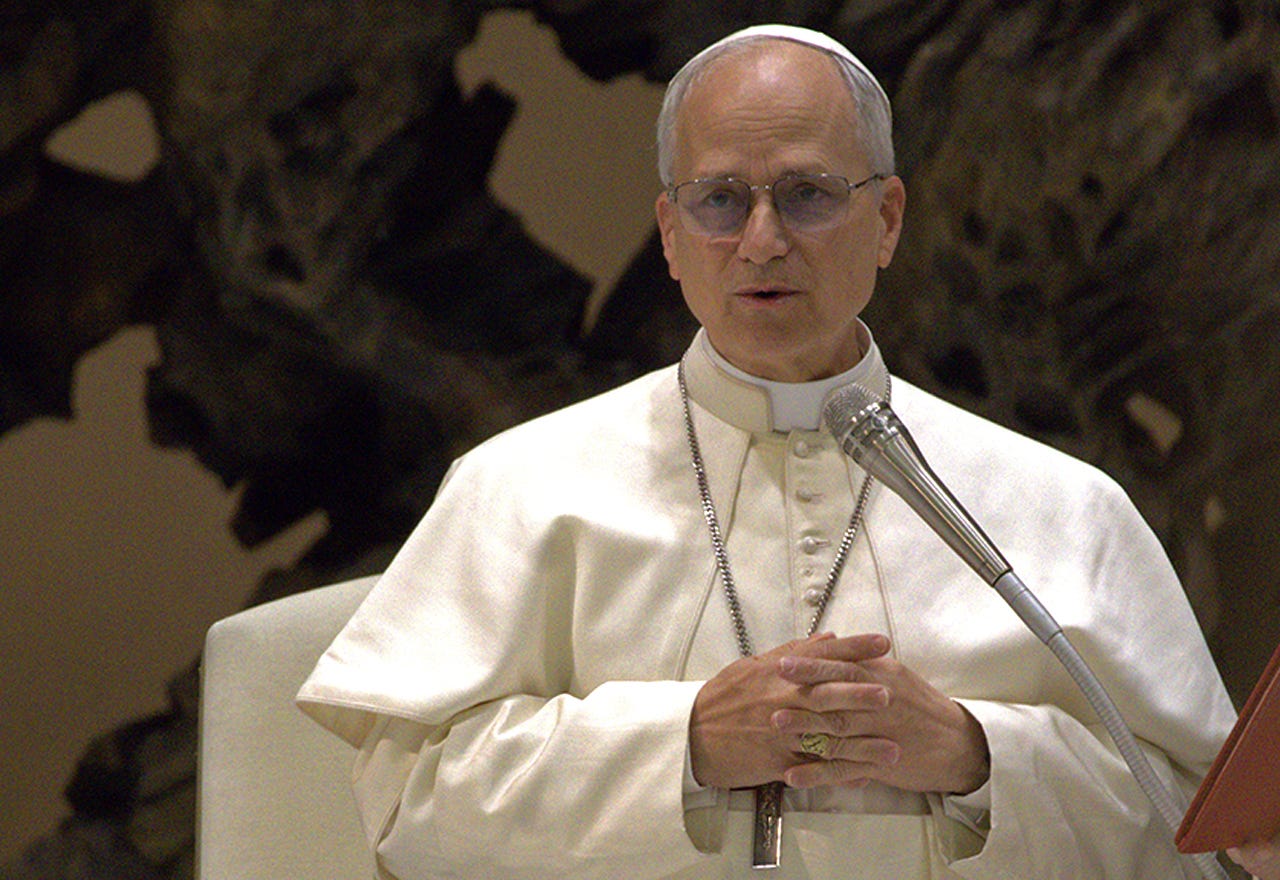
On March 14, 2026, Pope Leo XIV addressed the judges and officials of the Vatican City State Tribunal for the inauguration of its judicial year. The occasion was routine. Popes have been giving these addresses for decades, and they follow a predictable arc. Pontiff after Pontiff expresses gratitude for the quiet work of the judiciary, a few theological reflections on the nature of justice, and an exhortation to fidelity. Leo XIV followed a proven formula, and his remarks were remarkable primarily for their adherence to convention.
“Authentic justice,” the pope told his judges, “cannot be understood solely in the technical terms of positive law. In the light of the mission that guides the action of the Church, it also appears as the exercise of an ordered form of charity, capable of safeguarding and promoting communion.” He then spent the balance of his remarks unpacking this claim with support from the works of St. Augustine and St. Thomas Aquinas, grounding the administration of justice in the Thomistic virtue tradition and the Augustinian theology of rightly ordered love.

This is not new ground but draws from the most settled propositions in Catholic jurisprudence. That his remarks received attention tells us something about the current state of the institution he leads. For thirteen years, under the pontificate of Francis, the Angelic Doctor served a largely decorative function in papal discourse. He was invoked occasionally, but almost never deployed structurally. Francis’s preferred register was pastoral, situational, and oriented toward discernment and accompaniment rather than toward the stable and objective character of justice upon which Aquinas insists. Leo XIV’s address is not a revolution, but a recovery. And the fact that this recovery of first principles feels revolutionary invites reflection, not only for the Church but for any institution that claims to operate from pre-liberal philosophical foundations while having quietly abandoned them in practice.
The philosophical architecture of Leo’s remarks deserves attention, because it is doing more work than the occasion required. Leo XIV does not merely assert that justice transcends positive law; he provides the Thomistic scaffolding for the claim. He quotes Aquinas’s definition of justice from the Summa Theologiae: “constans et perpetua voluntas ius suum unicuique tribuendi,” the constant and perpetual will to render to each person what is due. He notes Aquinas’s insistence that “iustitia ad bonum commune ordinatur,” that justice is ordered to the common good. And he invokes the theological formula “caritas perfecta, perfecta iustitia est”: in the fullness of charity, justice finds its most authentic fulfillment.
The structure of the argument is precise. Justice is not a set of rules but a virtue, a stable disposition of the will oriented toward truth and the good of others. Because it is a virtue, it cannot be reduced to the technical application of norms, but requires the exercise of practical wisdom by a person whose character has been formed for the task. And because justice finds its perfection in charity, the legal order is not self-grounding. It depends on a prior moral order, an account of what is due to persons and why, that positive law presupposes but cannot generate.
This is the classical natural law critique of legal positivism, and it has secular analogues that readers of Telos will recognize. The insufficiency of proceduralism is a theme that runs from Carl Schmitt’s critique of liberal legalism through the Frankfurt School’s analysis of instrumental reason, both central to the intellectual project that Telos has sustained for more than half a century. Schmitt argued that liberal constitutionalism imagines a self-executing legal order in which the question “who decides?” can be permanently deferred, because the rules themselves decide. The Frankfurt School argued that instrumental rationality, left to its own devices, hollows out the substantive commitments that give institutions their purpose. Leo XIV is making a cognate claim from within the Catholic tradition. Positive law, however necessary, cannot sustain a just legal order without reference to the substantive moral vision that animates it.
It is worth noting what the pope is not saying. He is not dismissing positive law. He explicitly affirms “the observance of procedural safeguards, the impartiality of the judge, the effectiveness of the right of defence [sic] and the reasonable duration of proceedings” as conditions through which the judicial function “acquires particular authority and contributes to institutional stability.” The argument is not positivism versus natural law. It is that positivism is necessary but insufficient: the skeleton without which the body cannot stand, but not the life that animates it.
The Schmittian resonance, however, introduces the Schmittian problem. If positive law must be supplemented by the judgment of a person exercising the virtue of justice, everything depends on the formation and orientation of that person. The question “who decides?” does not disappear simply because one has identified the inadequacy of the claim that rules decide for themselves. It returns with greater force because the person who claims to transcend positive law in the name of a higher justice now wields a more potent authority than the mere technician of legal procedure ever did.
The Thomistic framework has an answer, but the answer presupposes conditions that do not obtain outside its native habitat. Aquinas wrote within a civilization that shared, at least nominally, a metaphysical anthropology: an account of what human beings are, their purpose, and what they are due. Within that shared horizon, “the constant and perpetual will to render to each what is due” has determinate content. Outside it, the formula becomes an invitation to fill in the blanks according to one’s own commitments, and to do so with the elevated confidence that comes from believing oneself to be serving justice rather than merely applying rules. The contemporary American legal landscape is littered with examples of such confidence run amok. Judges who override statutory text in the name of evolving standards of justice, prosecutors who decline to bring charges because enforcement would offend their understanding of equity, juries that reach verdicts animated by moral convictions, class animus, or political grievance untethered from facts or evidence: all of these actors could describe their conduct in the language of the tribunal remarks. Every one of them believes, or could plausibly believe, that he is exercising an ordered form of charity rather than merely applying positive law. The question is not whether they are sincere. Sincerity, absent a shared account of the order to which charity should conform, is no check at all on the exercise of power.
Leo XIV can address the Vatican tribunal in these terms because Vatican City is, uniquely among the world’s polities, a jurisdiction in which the metaphysical premises of the Thomistic argument are formally, if not actually, shared by all participants. The supreme legislator, executive, and judge is one person who claims to be the Vicar of Christ. Canon law is the first source of norms. The judges serve at the pleasure of the pope and exercise their power in his name. Whatever difficulties attend the practical administration of justice in this peculiar micro-state, the theoretical problem of shared premises does not arise. The rest of us are not so situated.
The most rigorous theological challenge to what Leo XIV is doing comes not from within the Catholic tradition but from the Reformation. Luther’s two-kingdoms theology represents the foundational Protestant attempt to answer the question the tribunal remarks raise: what is the relationship between divine justice and the positive law of temporal institutions?
Luther’s answer is that God governs through two distinct kingdoms, each with its own proper logic. The spiritual kingdom operates through the Gospel of grace, forgiveness, and the free gift of justification. The temporal kingdom operates through law, reason, and coercive order. Both are legitimate expressions of divine governance. Neither can substitute for the other. The temporal kingdom does not need to become the spiritual kingdom in order to fulfill its function. The judge who administers temporal law faithfully, with impartiality and procedural rigor, is already doing God’s work in the earthly kingdom. He does not need to imagine himself as administering divine charity for his work to have moral weight.
The force of this becomes clear when set against Leo XIV’s central claim. When the pope tells his judges that justice is “an ordered form of charity,” Luther would urge the sharpest caution. The moment a temporal judge begins to think of himself as administering charity rather than law, the restraints that proceduralism provides (imperfect, insufficient, but real) begin to dissolve. The judge who believes he is serving a justice that transcends positive law has given himself permission to override the law’s constraints, and he has done so with a confidence that no merely human actor is entitled to possess.
This is not a defense of positivism. Luther is neither Austin nor Kelsen. He does not believe that law is merely the command of the sovereign backed by force. He believes that temporal law participates in God’s governance of a fallen world. But he insists that the mode of that participation is proper to the temporal kingdom, which operates through reason, precedent, procedure, and the restraint of coercive power by institutional structure, not through the direct application of theological charity to legal disputes.
The contemporary relevance of Luther’s insight is stark. Every instance in which a legal actor invokes a justice higher than the positive law he is charged with administering, whether from the left or the right, is an instance of the category confusion Luther warned against. The progressive prosecutor who declines to enforce laws he considers unjust, and a conservatively ideological judge who reads his policy preferences into constitutional text are engaged in the same structural move. Both baptize temporal coercion with transcendent authority it does not possess. Luther’s two-kingdoms theology does not resolve the tension between positive law and transcendent justice. But it names, with a precision the Thomistic framework sometimes lacks, the specific danger of resolving it too quickly.
Had we only Thomism and Luther, we could merely diagnose our present ills. Positivism is insufficient, the Thomistic alternative is unavailable outside its native habitat, and the Lutheran correction warns against cheap substitutes. The question of formation, of where rightly ordered judges and legislators actually come from, would remain unanswered.
It is here that the Wesleyan tradition offers something constructive. John Wesley shared Luther’s Protestant sobriety about the fallenness of human institutions, but he refused the quietist implication that the brokenness of the temporal order is simply to be endured. His distinctive theological contribution was the insistence that sanctification is real, progressive, and practically achievable. He does not offer perfection in the Pelagian sense, but genuine transformation of the person through disciplined engagement with what he called “the means of grace.” Prayer, Scripture, sacrament, Christian conference (by which Wesley meant structured mutual accountability among believers), and acts of mercy were not optional devotional exercises but the mechanism through which persons were formed for the exercise of rightly ordered judgment.
The genius of the Wesleyan project was institutional. That emphasis on disciplined, morally formative community also points backward to earlier Protestant traditions, including aspects of Calvinist covenant theology, which likewise understood communal structures as central to the formation of Christian judgment. The class meetings and bands that defined early Methodism were intentional communities of formation, featuring small groups in which persons submitted to mutual examination, confessed their failings, and held one another accountable to standards that the broader culture did not enforce. Wesley’s famous dictum, “think and let think,” preserved genuine pluralism on matters not essential to the faith while insisting that the persons who exercise judgment must themselves be genuinely formed, not merely instructed or credentialed. This is a critical distinction. Credentialing tells you what a person knows. Formation shapes who a person is.
Translated out of confessional language, the Wesleyan insight is that virtue is cultivable at the human scale even when it is not achievable at the civilizational scale. One need not restore Christendom (the integralist hope) or redesign the constitutional order (the technocratic hope) in order to produce persons capable of judgment that transcends mere proceduralism. What is needed are communities of practice with thick moral commitments and real structures of accountability, communities honest enough to acknowledge that technical competence is not a substitute for character. The liberal order cannot produce the kind of people it needs through proceduralism alone. But it also cannot and should not attempt to reimpose a civilizational metaphysics. What it can do is attend seriously to the conditions under which formational communities flourish, and stop pretending that three years of law school and a bar examination produce wisdom.
Leo XIV’s address to the Vatican tribunal is a small, quiet text delivered to a tiny audience in a very small state. Its philosophical claims are not original. Its theological sources are not novel. Its practical implications, within the 121 acres to which it is formally addressed, are modest. And yet the question it raises is among the most urgent of the present political moment. The pope evidently doubts that any legal order can sustain itself on positive law alone.
The pope told his judges that their work requires “not only legal competence, but also wisdom, balance, and a constant search for truth.” That sentence is either a platitude or a radical challenge, depending on whether anyone takes seriously the question of where wisdom, balance, and a disposition toward truth actually come from. They do not come from law school. They do not come from procedural rules. They do not come from professional codes of conduct, however carefully drafted. They come from formation in communities with substantive moral commitments, communities capable of shaping not only what a person knows but who a person is. The Thomistic tradition names this problem with unmatched philosophical precision. The Lutheran tradition identifies, with equal precision, the danger of premature solutions. The Wesleyan tradition suggests that the work of formation is possible, if modest in scope and honest about its limits. Whether any of these resources can be brought to bear on the institutions that most urgently need them is a question that Leo XIV’s remarks pose but do not answer. Perhaps it is enough, for now, that a pope has posed it again. The answer will have to come from the rest of us, in communities smaller and more particular than Rome, doing the slow and unspectacular work of forming persons for the exercise of judgment in a world that feels increasingly unformed and uninterested in reformation.
Topics: Reflections & Dialogues
Tim Rosenberger is a pastor and attorney and cofounder of Excelsior Action.