

Konrad Weiss on the Christian Epimetheus: A Negative Political Theology Adjacent to Carl Schmitt
by Russell A. Berman

German author Konrad Weiss (1880–1940) left a body of work including poetry, some prose fiction, art criticism, travel essays, and—this is our concern now—his 1933 essay on the “Christian Epimetheus.” This figure of thought makes several appearances in the writings of Carl Schmitt. Schmitt and Weiss both participated in German Catholic thinking of the era, although they take that legacy in alternative directions along the religious spectrum between activism and mysticism: Schmitt’s decisionism versus Weiss’s negative theology. Understanding Weiss can shed light on Schmitt.
The Christian Epimetheus treats several distinct topics. First, it presents a political diary from the Hindenburg election of 1932 to Hitler’s accession to power in 1933. This record of contemporary history includes reflections on political personalities as well as constitutional technicalities, e.g., whether Hindenburg’s presidency could have been extended by the Reichstag alone rather than going to a general election—which Hindenburg won but which gave Hitler a significant boost in public presence.
Second, the essay includes implicit reflections on party politics, in particular regarding the Catholic Center Party, which had been a core part of the Weimar coalition supporting the Republic but which found itself at loose ends in the context of the crises after 1930. Weiss also provides a critical analysis and parallel rejections of two competing tendencies: Nazi racial thinking and liberal humanism. Normally seen as opposites, Weiss rejects them symmetrically from a distinctive Catholic conservative position: both proceed from positive assumptions of nature; in contrast, Weiss invokes a German history of overcoming nature in the early medieval transition from paganism to Christianity.

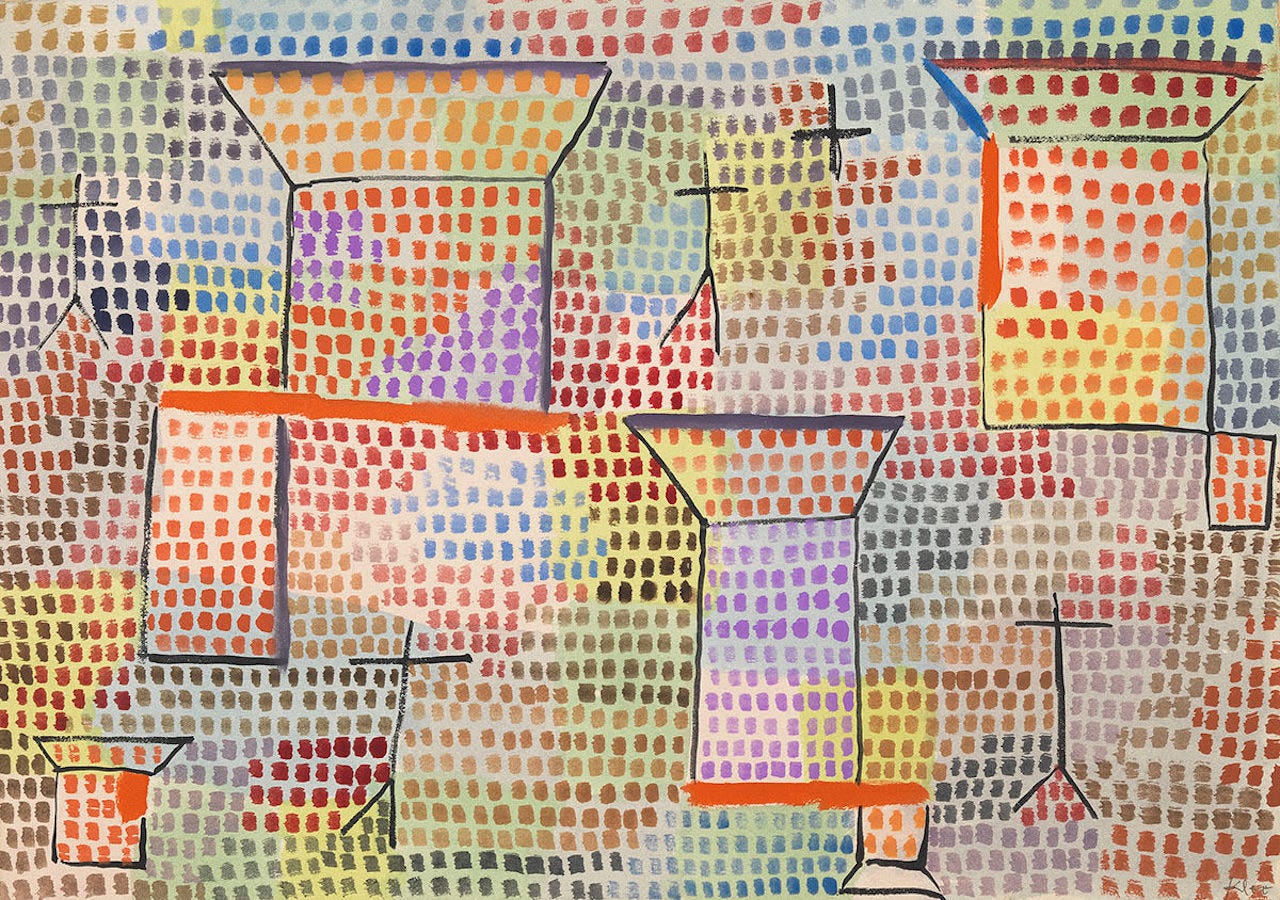
Third, Weiss develops a negative theology centered on Mary and culminating in the Pietà, which he also projects onto a theory of visual art. The aesthetic points to a program for abstraction with theological foundations: the image (Inbild) involves a spiritual core that necessarily remains elusive. Works of art do not depict; they withhold. Paintings are representational as icons rather than as realistic mimesis. While Weiss often invokes medieval architecture as a reference point, he was in fact a proponent of modern art in Munich of the early twentieth century and was close to the painter Karl Caspar, whom the Nazis would declare as “degenerate.”
To begin to make Weiss legible to contemporary theoretical concerns, it is worth recognizing how The Christian Epimetheus has a set of divergent ambitions—in addition to its significance as a companion text to Schmitt.
Weiss’s essay offers at times a powerful critique of modernity—Weimar culture and its excess—as a regime of unbounded production, reminiscent of Walter Benjamin on “mechanical reproduction” or Jean Baudrillard’s later attack on “productivism.” Weiss might be misunderstood as standing near a Lukácsian critique of reification, though without Georg Lukács’s Marxist framework, certainly without his progressivist philosophy of history, and of course phrased in a very different idiom. For Lukács, modernity dissolves the relation between form and substance, with a resulting loss of unity. The aspiration to repair that fragmentation reveals an underlying classicism in his Marxism. In contrast, for Weiss unity is always and necessarily illusory, insofar as it conceals the unsurpassable gap between creator and created. This argument is particularly strong in Weiss’s attacks on liberalism and humanitarianism: Menschlichkeit or humane-ness turns out to be unconcerned with genuine Menschheit or humanity.
Second, the essay unfolds a theological account of absence and measure. The insistence on human creatureliness and creation in general does not flow into a pantheistic endorsement of the whole cosmos as a divine accomplishment. On the contrary, the claim of createdness indicates the distance between the creator and the creature. Art and politics should, he suggests, proceed from an internalization of this gap rather than attempting to feign completeness.
At the center of Weiss’s thought lies a theological anthropology structured by absence. The Inbild—the inner image or figural ground—is not present as a stable center; it is withdrawn, operative precisely through its iconic non-presence. Meaning therefore “takes place outside the center,” and the individual is constituted by a detachment from this absent ground. Behind this account, one can recognize Weiss’s ultimate dogmatic assumption of a flawed state of fallenness, or original sin, although he does not use that terminology.
The figure of Epimetheus names the retrospective stance; his Christianity adds a component of regret or mourning. Against the Promethean drive to project, create, and dominate, Epimetheus embodies after-knowledge, receptivity to the point of passivity and measure. Rather than initiating action, he responds to what is given—and what is given is marked by lack. The “Epimethean justice” that Weiss invokes is not distributive justice in a conventional sense, but a sense of appropriate order coupled with a refusal to exceed what can be rightly borne by the absent center.
A third aspect brings into focus the explicitly political vocabulary that emerges in the text: justice, measure, division, and opposition. Here Weiss can be read as offering a political theology, though his position is not reducible to Schmitt’s. Schmitt proposes a decisionism that is necessarily activist; Weiss articulates a witnessing of catastrophe that leads him toward a set of passive mystical stances: reclusa, or withdrawal from the world; immaculata, or awareness without intervention; and pieta, the figure of mournful comfort. Compared to Schmitt, he is apolitical, outside the state, yet perhaps close to Ernst Jünger’s figure of the anarch as described in his novel Eumeswil.
Weiss’s invocation of justice marks a shift from epistemology to political form. Justice, however, is not grounded in unity; it arises from distance and division. His formula—“distances are justices”—turns into the insistence that forms involve structured separations. Justice is not a matter of normative equality. At stake instead are propriety of order, hierarchical structure, and empathy, most pronounced when he addresses the question of “the poor man.”
His term Gegenschaft is crucial. It designates a condition of being set against, a structural field in which differentiation becomes constitutive. Political reality is not a harmonious whole—neither democratic egalitarianism nor Nazi Volksgemeinschaft—but an arrangement of separating pillars. In fact, Weiss returns repeatedly to architectural images from cathedrals, where pillars structure the interior space: a spatialized order of divisions. Justice, in this context, is the regulation of these divisions through measure. Weiss may even be pointing toward a corporativist politics (one might think of “pillarized” societies of Verzuiling as in the Netherlands).
What distinguishes Weiss from more familiar political theological frameworks is that his argument is not grounded in sovereignty or decision, but in absence and proportion. This removes the possibility of a fully self-grounding political order. Instead, political life becomes a site in which the absence of the center must be negotiated through measure, without ever being overcome. It would be fair to say that he does not offer a political theory, let alone a party program, but instead a reflection on the limitations of the political altogether, perhaps a negative political theology. It is worth recalling here Schmitt’s judgment on the essay: “One may dismiss his Marian image of history as mere historical mysticism. However, its dark truth is thereby not disconfirmed, and neither is its significance as a historical counterforce against the leveling of history to the status of universal humanity, to the museum of the past, and an exchangeable costume to conceal the bluntness of activist attempts to give meaning to the meaningless.”1
After Catastrophe
Epimetheus looks backward, and the end of the essay places him in a storm. That image anticipates the storm of progress that traps Benjamin’s “angel of history” in his “Theses on the Philosophy of History” of 1940. The same image of “storm” figures at the conclusion of Martin Heidegger’s 1933 speech on “The Self-Assertion of the German University,” although the reference there was arguably to the “Storm Troopers” attending the lecture. Weiss does not specify which storm or the catastrophe that is at stake for Epimetheus, but one can speculate: the carnage of World War I, the end of the German Empire, or the catastrophe of modernity in general—the Reformation, perhaps, since Weiss references the tensions between Catholics and Protestants in Germany. Alternatively the catastrophe can be read in religious terms: the Crucifixion, the banishment from Eden, or even creation as such that places us at irreducible distance from the creator.
This post-catastrophic historic sensibility explains the usefulness as well as the limits of Weiss’s account today. As much as he is a critic of the Nazis, he concedes that Germany faced a profound crisis involving a substantively national culture (hence a national, but not an ethno-national argument). A conservative anti-Nazi, he attempts to rescue an understanding of German nationhood as a precondition to achieving some social stabilization. Reading Weiss today therefore leaves us with the question as to the standing of any national history, e.g., American national history, as a key to contemporary phenomena. Does (deep) national history still matter at all in the age of globalization, mass migration, and “world citizenship”? What place should national memory play in curricula—if any at all? Similarly, one can ask about the pertinence of Weiss’s parallel dismantlings of liberalism and racialism—the racial epistemologies of the ethno-nationalists on the right and the identity-politicians on the left.
Yet Weiss’s late Weimar catastrophism also appears incongruous in the United States of 2026 (at most we have a mood expecting catastrophe rather than a sense of already living in its aftermath). Are there nonetheless ways to read Weiss as having significance for our contemporary situation? Most obviously is the challenge to ask about the importance of religion in our cultural self-understanding. Weiss was looking for a theological response to the Weimar crisis, a solution that the Catholic Center Party had failed to supply. His essay therefore prompts us to ask the question about the status of religion today. In fact it appears that a sort of religious revival may be underway, evidenced in increasing church attendance.
While Weiss’s ambience of mournful quietism nonetheless seems distant, there is an argument to be made building on the earlier reference to Jünger’s anarch. The Weissian three-part prescription—reclusa, immaculata, pieta—could be transposed onto a variant of anarchic libertarianism: the urgency of developing effective postures outside the state and conventional politics, but driven by integrity, commitment, and solace, rather than by obedience or citizenship. In any case, Weiss does not leave us fully stateless: the essay includes surprisingly sympathetic portraits of Brüning (explicitly as Catholic chancellor and wise leader) and of Hindenburg, so politics in the conventional sense is not fully excluded; it is just not at the center of his account. Weiss’s emphasis on the existential gap that defines human existence—his central point—does however preclude any world-remaking gnosticism, whether of the revolutionaries on the right or on the left.
A translation of the full essay is in preparation; an English version of the conclusion follows. Weiss’s language is challenging. To facilitate understanding, it is worth remembering that the discussion of creation is primarily about the gap between creator and created (in contrast to the American creationist discourse). Similarly references to image or likeness involve non-identity. Secondly the language of “angulation” and “disposition” involves a theory of history as textured, not an empty continuum (another point of intersection with Benjamin). History should not be understood as chronology but rather as an alternative to nature and, more importantly, as incarnation. Finally, the concluding reference to 1 John 5:6–8 appears to offer a forceful affirmation at odds with the quietism of Weiss’s triad of reclusa, immaculata, and pieta, indeed a sudden shift from Mary to Jesus. We are left with an interpretive puzzle about the relationship of this conclusion to the Marian theology at the core of the essay.
The Conclusion of Konrad Weiss, The Christian Epimetheus
If, therefore, the middle is, like justice, extinguished in the image, then the world of the earth becomes richest. But how does this great and beautiful abandonment come about? For—this is God’s mystery with His creation—the richness within the image produces abandonment. We are given to understand that creation knows nothing of the honor that is communicated in God’s own sight and not in conception; and what we conceive we must carry over, through the Virgin, into fervent honor and into createdness [Geschöpflichkeit]—yet it robs us through excess. And what we receive, purified in a historical sense, brings us all the more from the earth: it leads us into the dispositive essence of the earth.
Seemingly—that is, if one reflects on the methodical concept of the Christian order of history (and that a true metaphysics is possible only through a gap in which the earth becomes image and the assistance of meaning becomes foundation, in contrast to the mere form of analogy)—and if one sees that the degree of the Christian form lies in overcoming the merely analogical—then it appears that the Christian measure, as a prior exclusion, negates the inclusive classical worldview, which is bound to its own self-clarification.
Is the Christian form, then, one that does not bind its content to its essence through clarification, but rather, the more it separates content from non-content, the more it receives it as life and thereby departs from it? Does it then appear to be merely a technique? (Indeed, even the old Christian architectural form contains a technique within itself, as an integrated fervor.)
And yet, through the comparative exchange of substance between inside and outside, there arise angulation, intermediate position, and disposition: formed both negatively and positively through comparative selection, they signify exchanged forces—through angulation and proportion, determination and contribution—with the defense of immaculate justice, with the strength of deed and of nature attributed to it, and with transgression in the true meaning, as an inner-sense. The order itself gathers wealth and bears its own consequence—until meaning itself is understood in honor. But here begins what creation itself does not know as honor: the order cannot itself rule as concept within its own receptivity; it is broken off, like a creature, from witnessing. We must be deprived and held in counterbalance with the Virgin; and she herself cannot enter into order as into an honor. She—who, without meaning in herself, holds all things within meaning and gives meaning to history—looks expectantly upon creation and stands, as it were, abandoned [ausgeliefert] within witnessing. What is decided in meaning arises more deeply, as desire, within witness; this is the path of time, and the meaning of salvation cannot be enacted apart from creation. It is through the meaning of history that we have honor.
But we, Epimetheus, are swept along in witnessing as in a storm. This is the threefold witnessing on earth: and corresponding to the Trinity in heaven, it is—as John says—the three who bear witness on earth: the Spirit, the water, and the blood (and these three are one). In these testimonies, history storms [stürmt die Geschichte], and we are caught up within this great dispositive reversal.
Russell A. Berman is Walter A. Haas Professor in the Humanities at Stanford, a Senior Fellow at the Hoover Institution, and former editor of Telos. He is now President of the Telos-Paul Piccone Institute.
Carl Schmitt, “Three Possibilities for a Christian Conception of History,” Telos 147 (Summer 2009): 170.